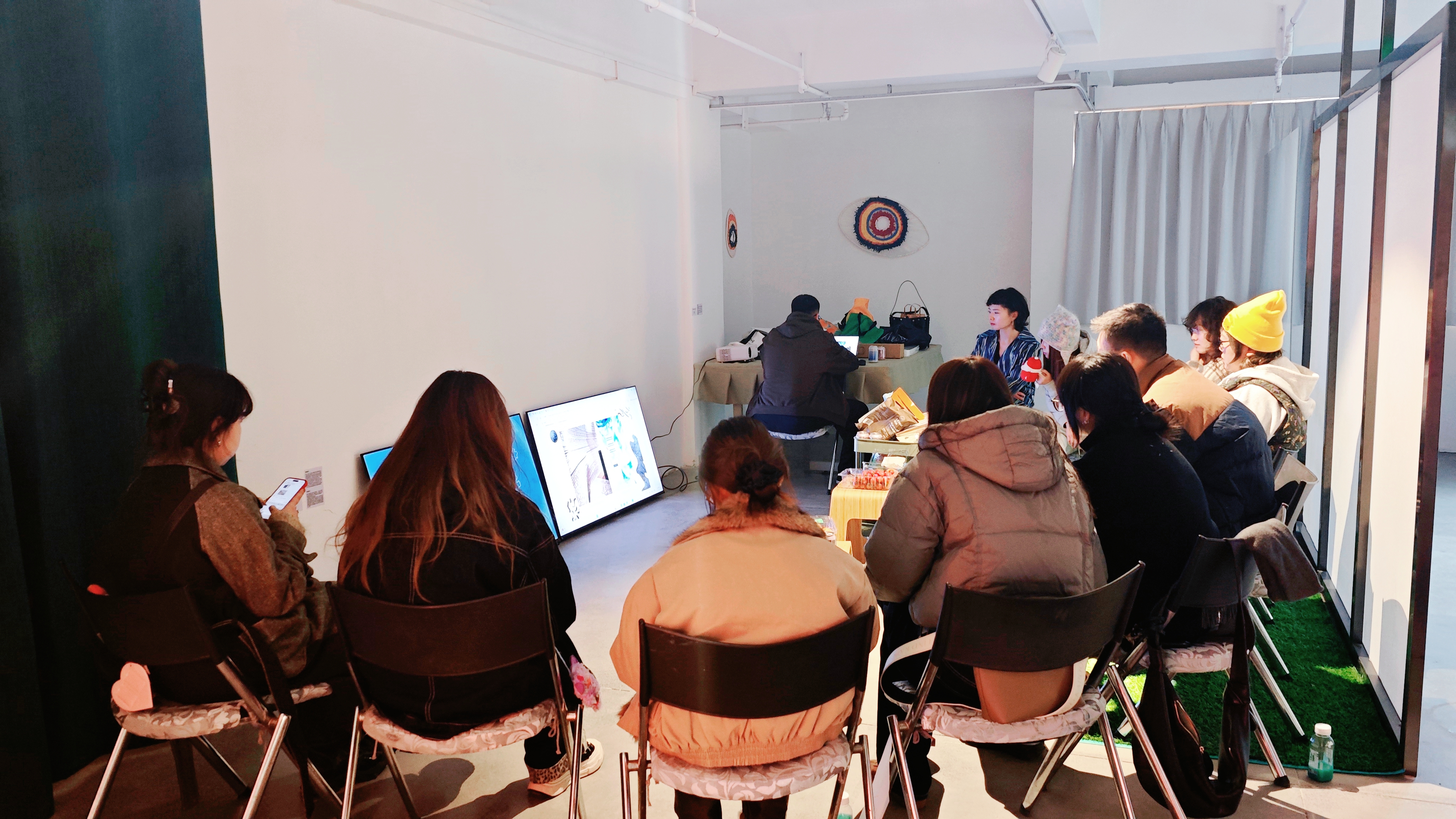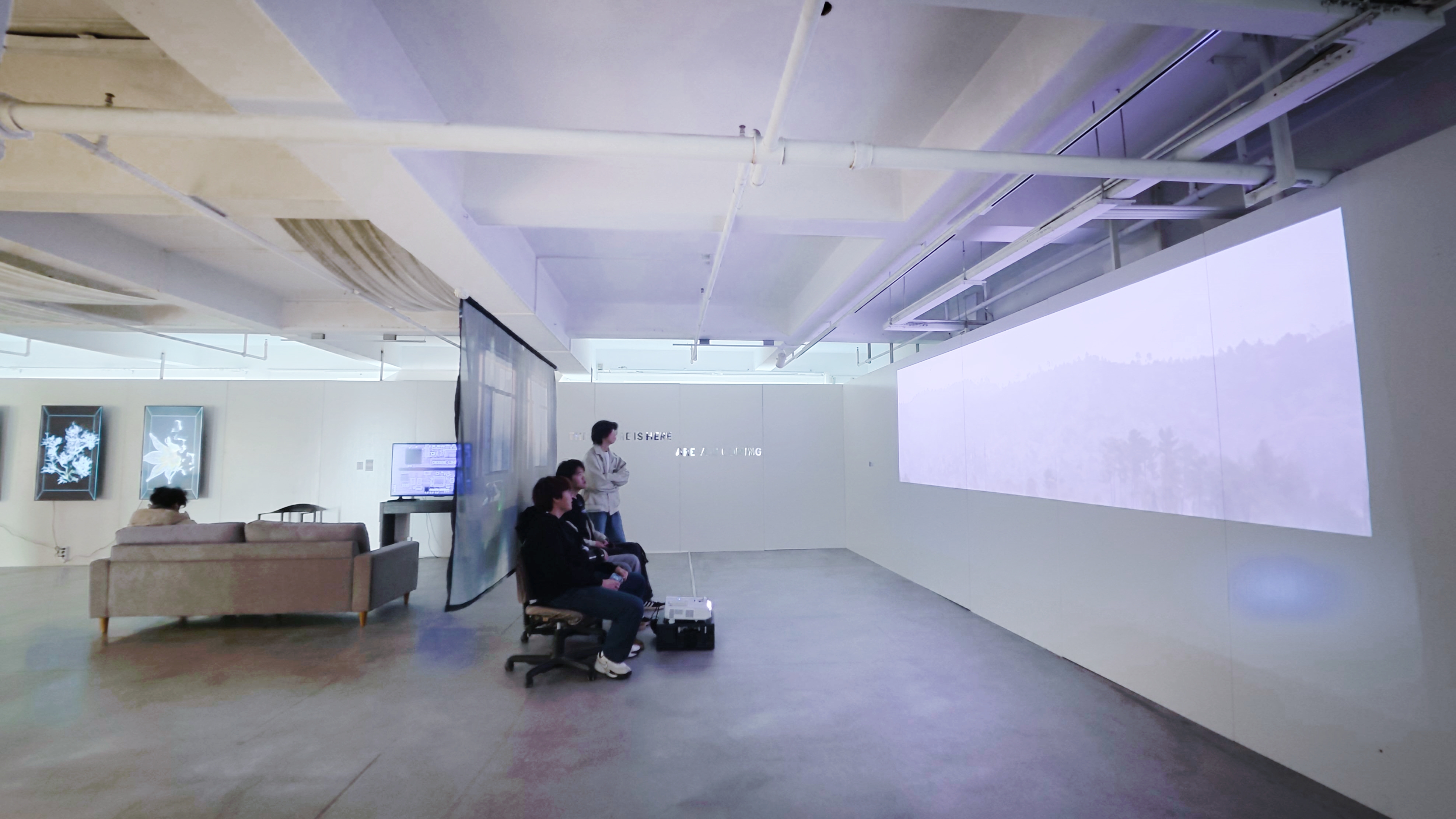
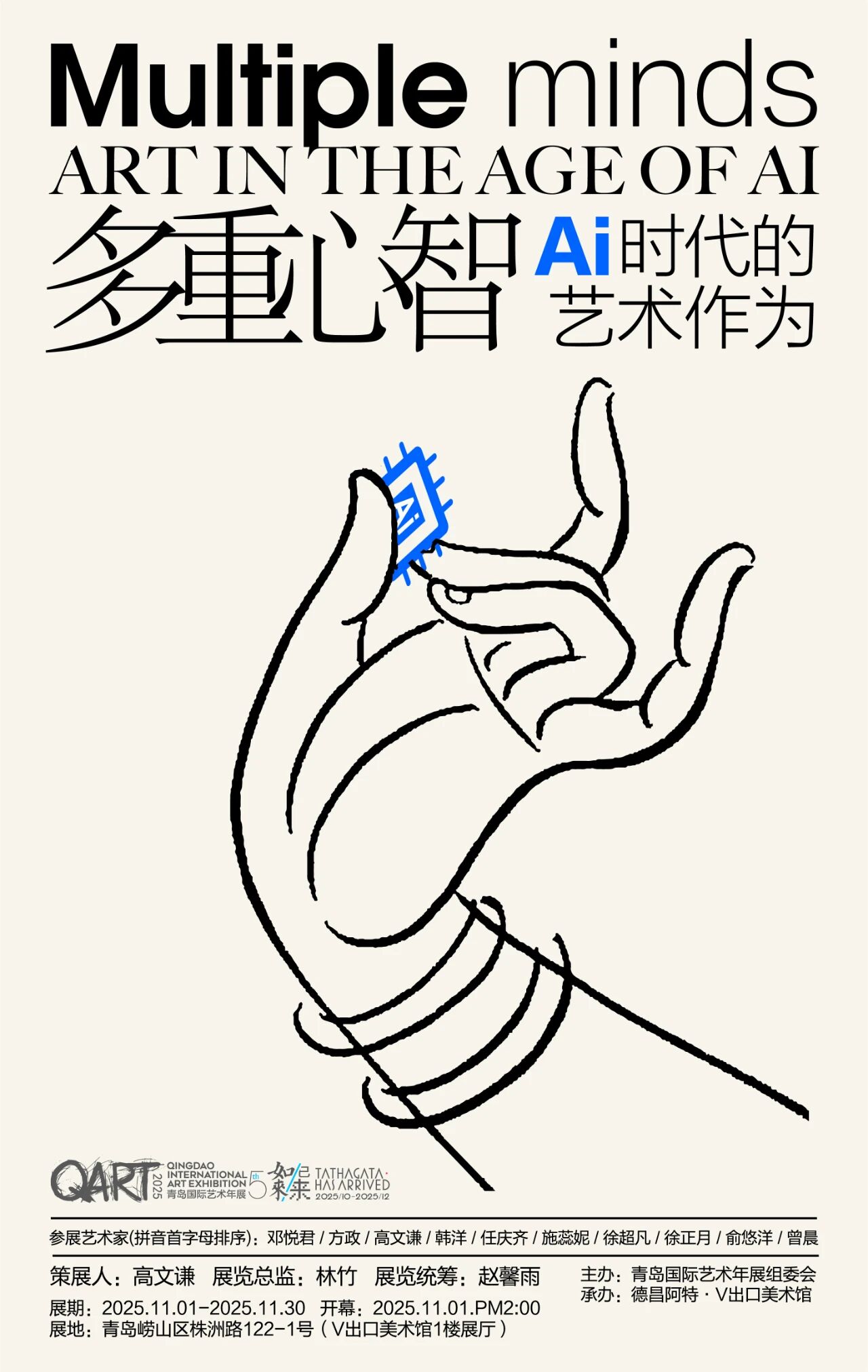
Multiple Minds – The Role of Art in the AI Era
Organizer:
Organizing Committee of the Qingdao International Art Biennale
Organizer Undertaking:
Dechang Art V Exit Art Museum
Exhibition Director:
LIN Zhu
Exhibition Coordinators:
ZHAO Xinyu
FU Nan
Artists :
DENG Yuejun / FANG Zheng / GAO Wenqian / HAN Yang / REN Qingqi / SHI Ruini / XU Chaofan / XU Zhengyue / YU Youyang / ZENG Chen
Exhibition Period:
November 1, 2025 – November 30, 2025
Opening Time:
2:00 PM, November 1, 2025
Venue:
Hall 1, V Exit Art Museum, No.122-1 Zhuzhou Road, Laoshan District, Qingdao
· Foreword ·
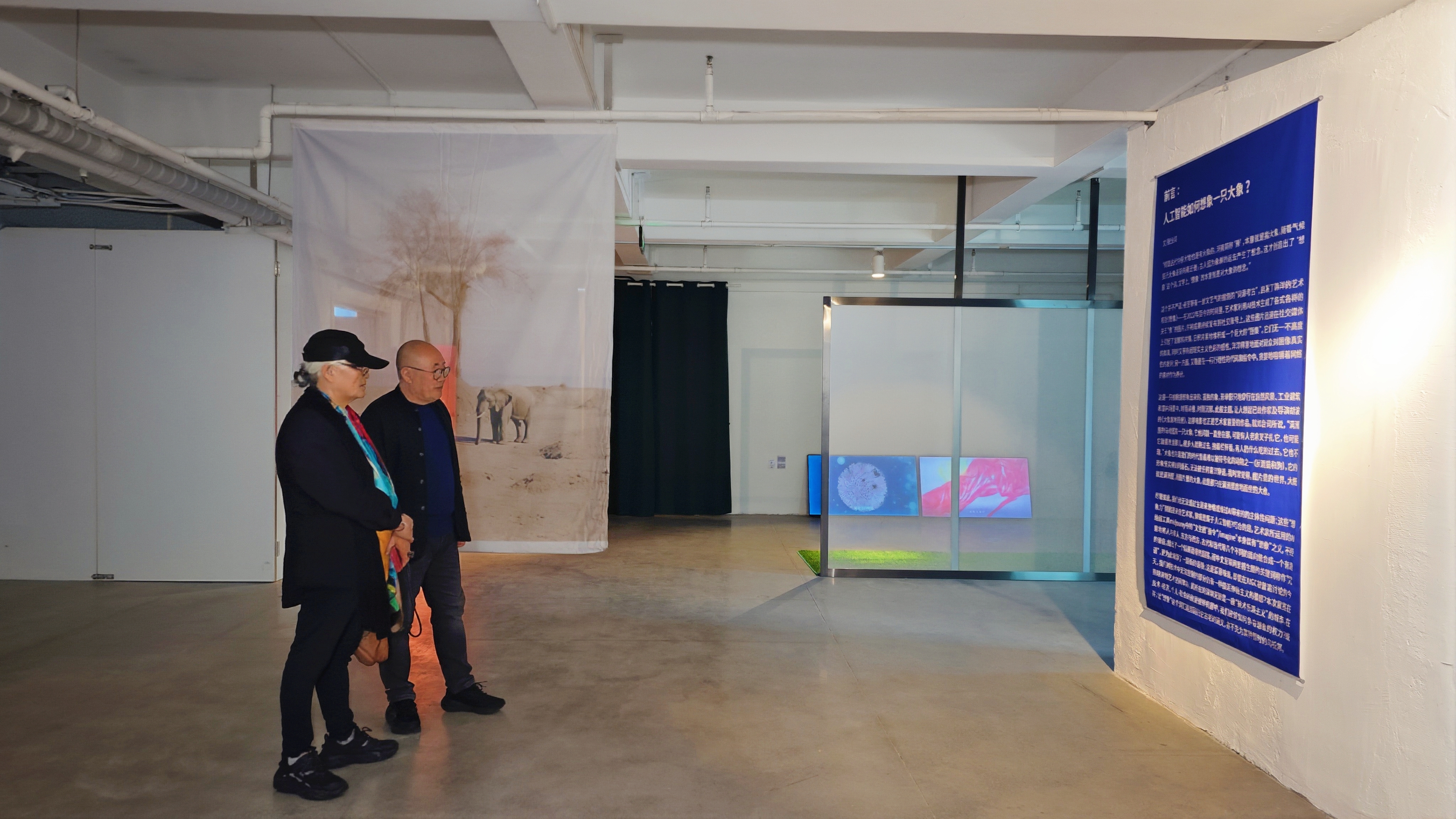
As artificial intelligence rapidly permeates numerous aspects of the contemporary world—ranging from national-level technological competitions down to an individual’s trivial question of “What to eat for lunch”—AI repeatedly executes machine learning and reasoning, engaging in constant interaction with the world across data, physical, and spiritual dimensions. It learns from data generated in the past, gains experience through interventions in the present, and further informs decision-making for the future.
AI (or rather, AIs) is evolving from human-supervised operation toward autonomous functioning, pervasively exerting an unsettling influence on the ideological frameworks and emotional landscapes of both human collectives and individuals. If layers of neural networks are regarded as mysterious black boxes, AI models are like mirrors that reflect human society. The addictiveness, biases, utilitarianism, and desires embedded in algorithms are all echoes of human nature projected outward. The combined application of multiple AI models, both large and small, resembles a bizarre, distorted image formed by countless mirrored surfaces. As we feed these systems with data and knowledge, we are in turn reflected by them—re-examined and reshaped by the “intelligence” we ourselves created.
Within the context of “multiple minds”, AI is no longer merely an external other. Instead, it has gradually evolved from an extension and dissociated entity of human consciousness into another layer of “mind” that co-exists and co-generates with us. It is both a tool and a subject that exists alongside humans and evolves in tandem with them; it is both a programmed and trained model crafted by us, and a form of thinking that gazes back at humanity in reverse.
For artists, the truly worthy question to explore is not “Does AI possess a mind?”, but rather: when our own minds have become inextricably intertwined with AI, what exactly are the thoughts we think, the feelings we feel, and the sights we see? Will there come a day when intelligent AI can help humans achieve a genuine understanding of themselves?
This exhibition does not aim to showcase the ingenuity or sophistication with which artists utilize AI technology, nor does it put forward dystopian arguments. Instead, through this technological mirror, it returns to the original purpose of art—the exploration and contemplation of “humanity” and “the world”.
About the Curator
Gao Wenqian was born in Shandong Province. He graduated from the Printmaking Department of the China Academy of Art in 2013 and the École Nationale Supérieure des Beaux-Arts de Paris in 2019. Currently based in Beijing, his artistic practice spans a diverse range of mediums including interactive installations, games, experimental video, internet-based art, and sound art.
· Profiles of Participating Artists and Their Works ·
Deng Yuejun
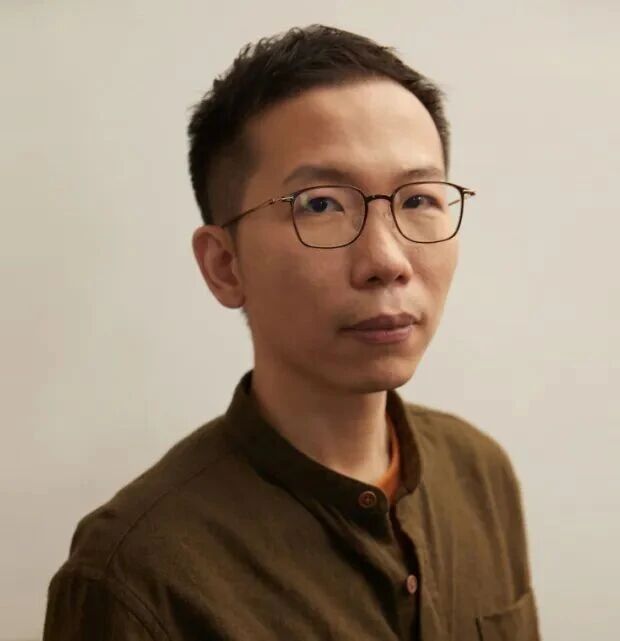
A new media and interdisciplinary artist. She holds a Bachelor’s degree in New Media Art and a Master’s degree in Intermedia Art from the China Academy of Art. She participated in the exchange program at Zurich University of the Arts (ZHDK) in Switzerland, was an artist-in-residence of the Wanlai Project at Nanjing University, and a collaborative artist for Bulgari’s Serpenti Imagine project. She also serves as a guest lecturer at the China Academy of Art, Nanjing University of the Arts, and Hangzhou Normal University.
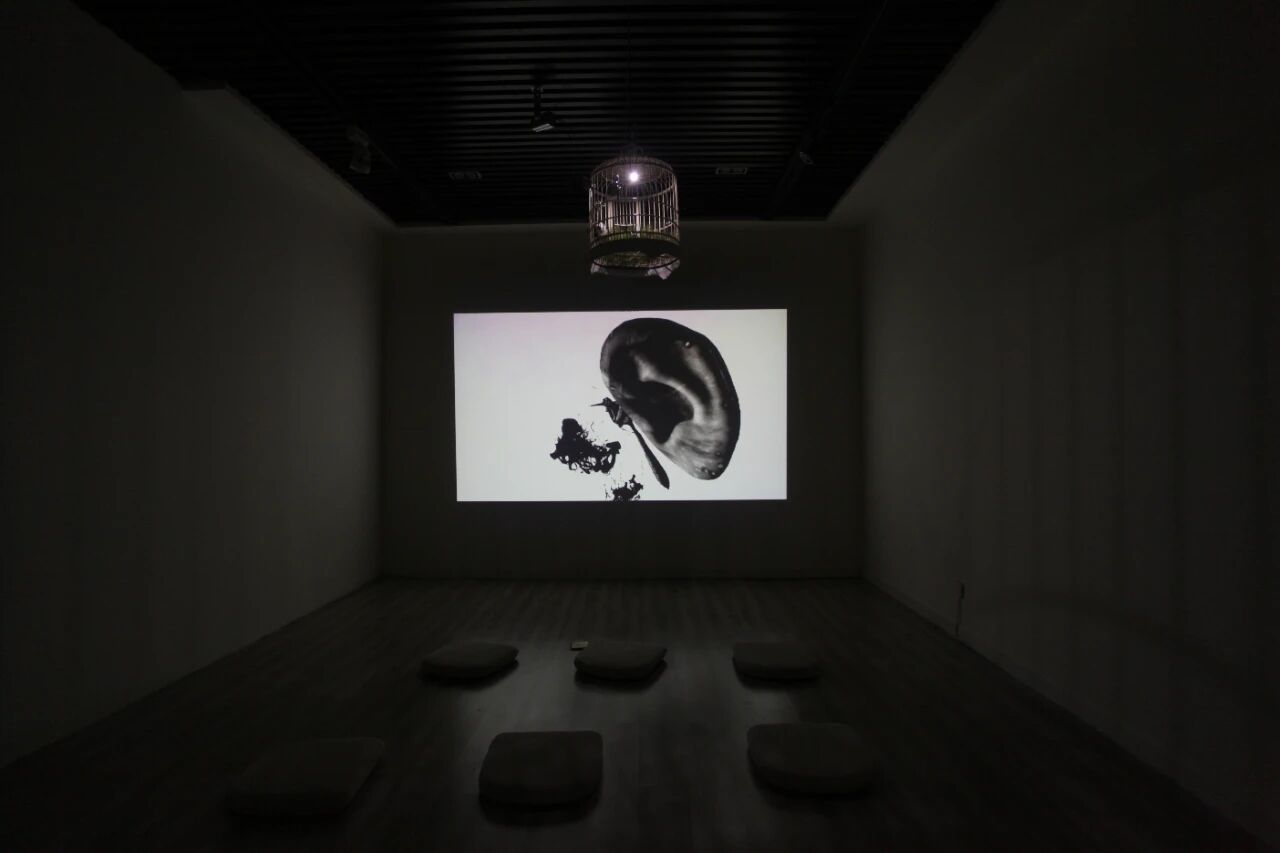
Somniloquy, ink wash animation, 10 min 39 sec, 2010-3 live scene photos
I have always held an indescribable fascination for dreams.
The boundary between memory and dream has grown increasingly blurred,
so much so that I cannot distinguish whether what I see before me is a real experience or a fragment of a dream.
At a certain moment, I began to record my dreams,
yet I am not sure whether these words belong to the me in reality,
or the "other me" lurking in the dreams.
This work was born precisely from such ambiguity and uncertainty.
Taking the human facial features as the narrative core,
I integrate black-and-white ink imagery with live-action footage to construct a visual language of dreams.
The work attempts to explore the fluidity of memory and perception,
as well as the poetic structure driven by the subconscious.
Fang Zheng
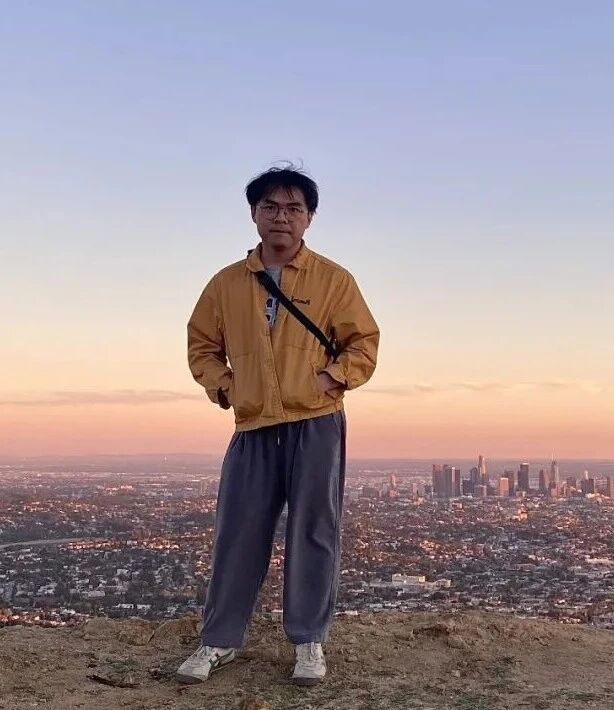
Co-founder of Old Media and co-initiator of Jasagala. He once taught at the Central Academy of Fine Arts and the University of California, Los Angeles (UCLA). He is an artist on the China Photography Annual Ranking List and the winner of the Golden Hibiscus Award at the Chengdu International Photography Week. He is the author of Undergraduate Graduation Exhibition of Local Academy of Fine Arts and the producer of the game Self-Combing: The Vanishing Bachelor Ladies' House.
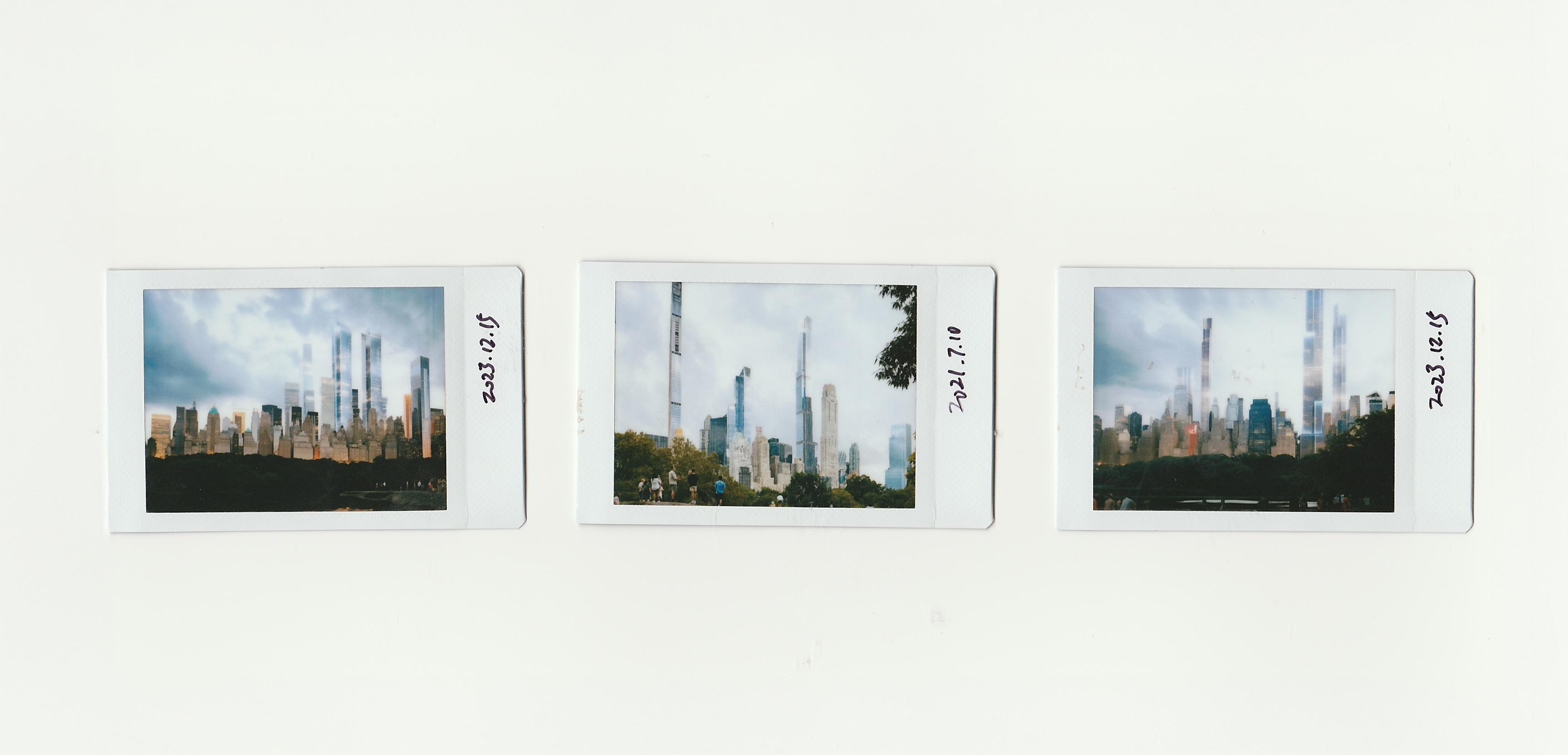
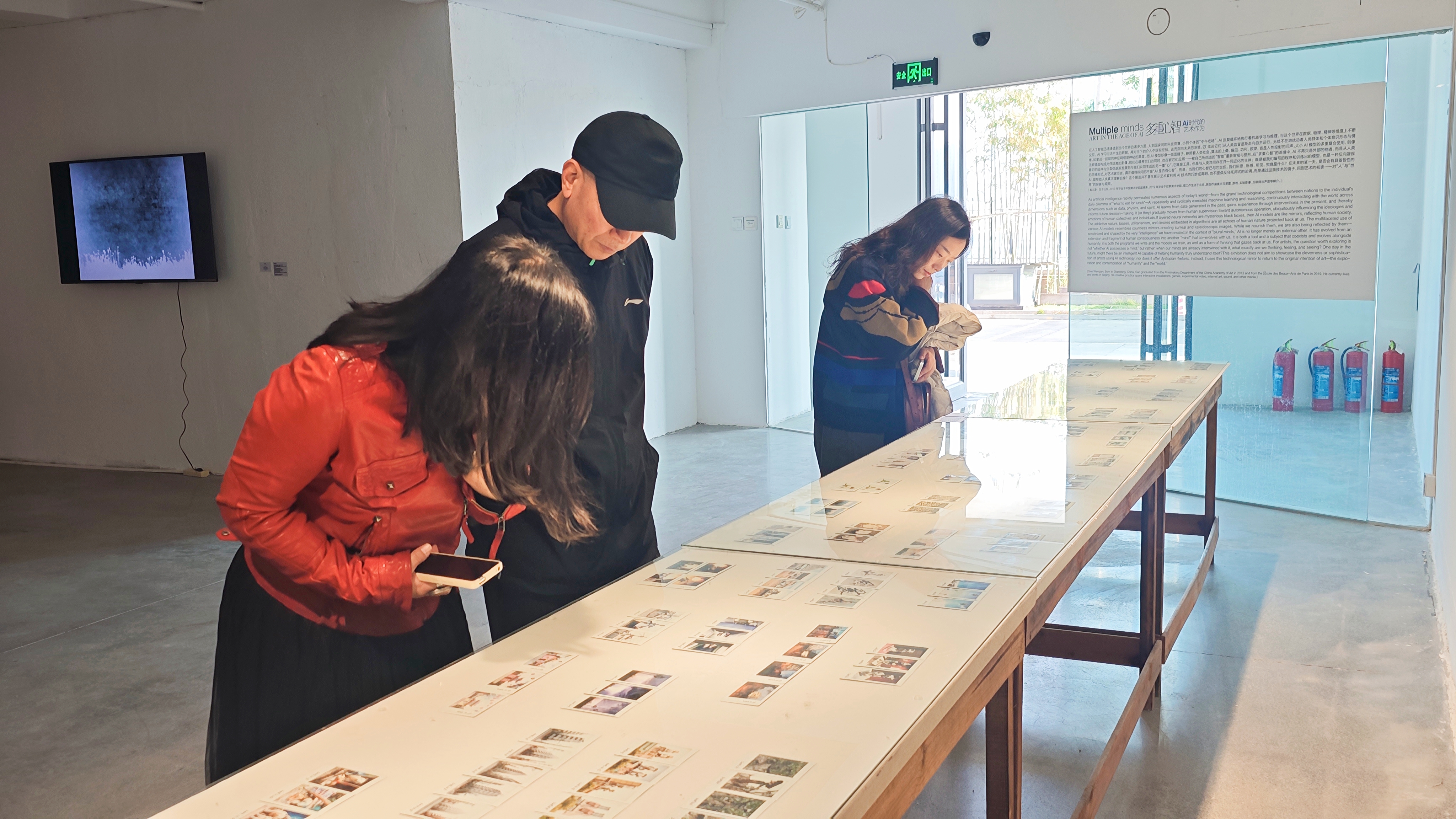
Confidence Level, 2023, Polaroid, Image 1
This work constructs a montage structure by juxtaposing personal mobile phone photography and AI-generated images in the form of Polaroids, creating fractures and jump cuts between reality and simulacra. Meanwhile, the images, as searchable and replaceable data units, are extracted from potential image sets and reconfigured. The work attempts to redefine the potential boundaries of authenticity and diversity in the real world amid the infinite generation and selection of images.
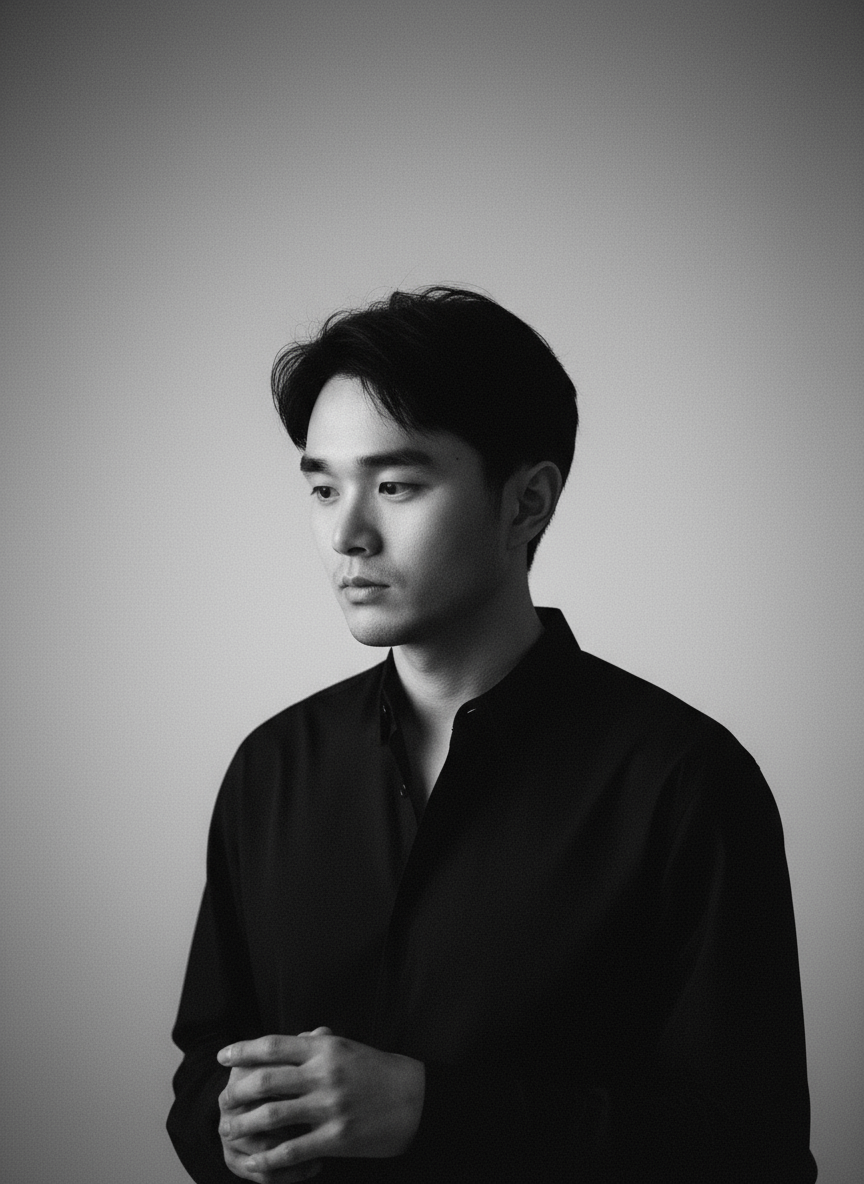
Gao Wenqian
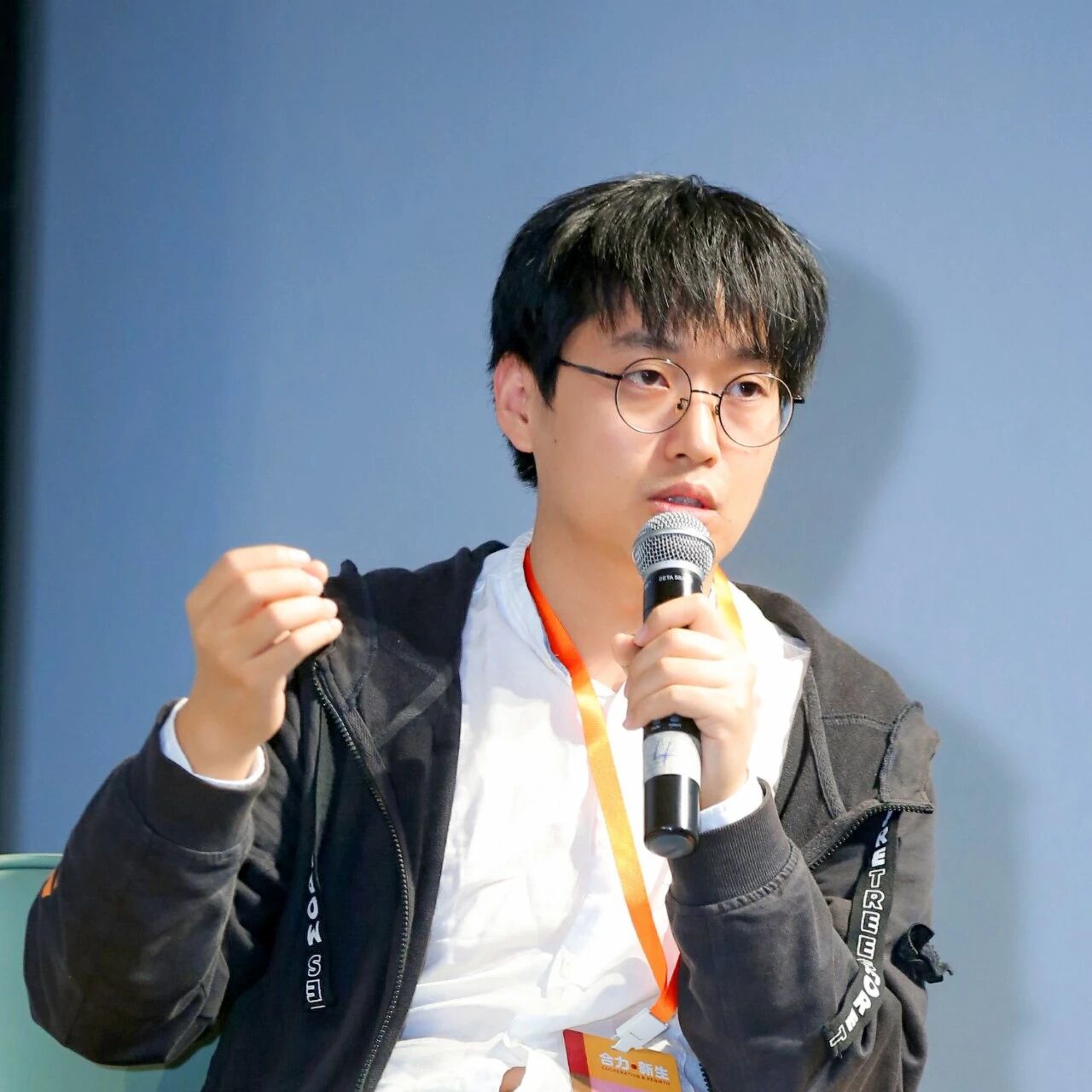
Born in Shandong, he graduated from the Printmaking Department of the China Academy of Art in 2013 and from the École Nationale Supérieure des Beaux-Arts de Paris in 2019. He currently works and lives in Beijing. His artistic practice spans a diverse range of mediums including interactive installations, games, experimental video, internet-based art and sound art. Centering on the meta-narrative of media ontology, he conducts thought experiments by constructing "model" scenarios to explore the contradictions and paradoxes of the world.
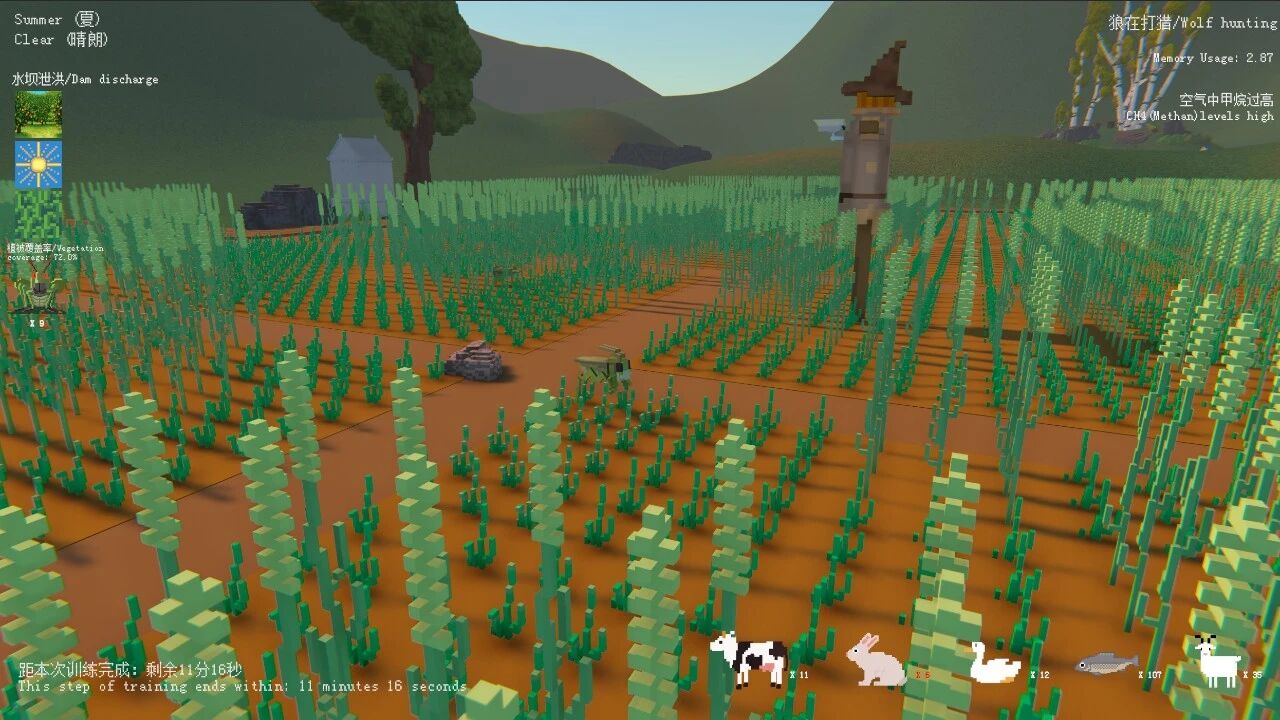
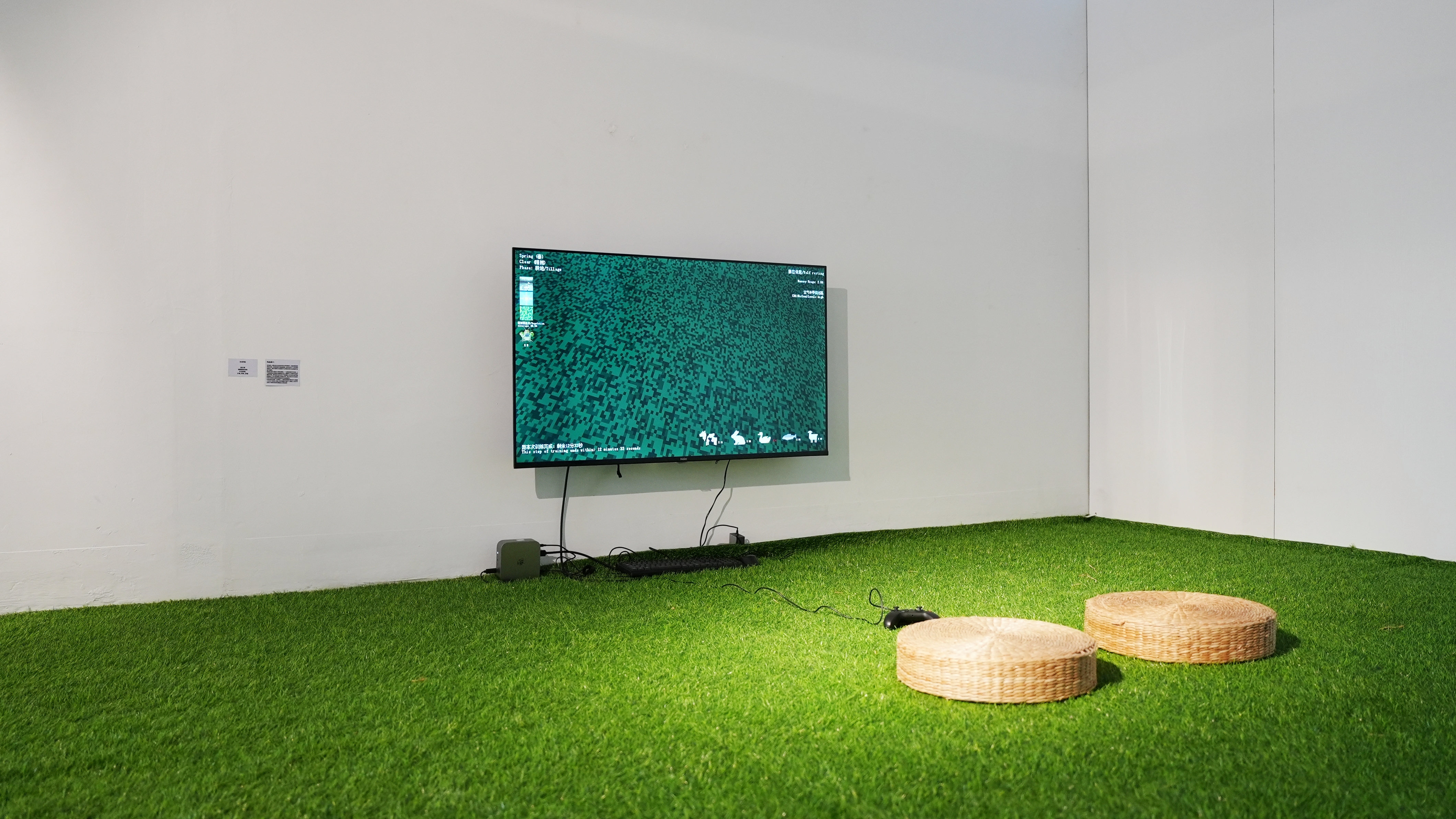
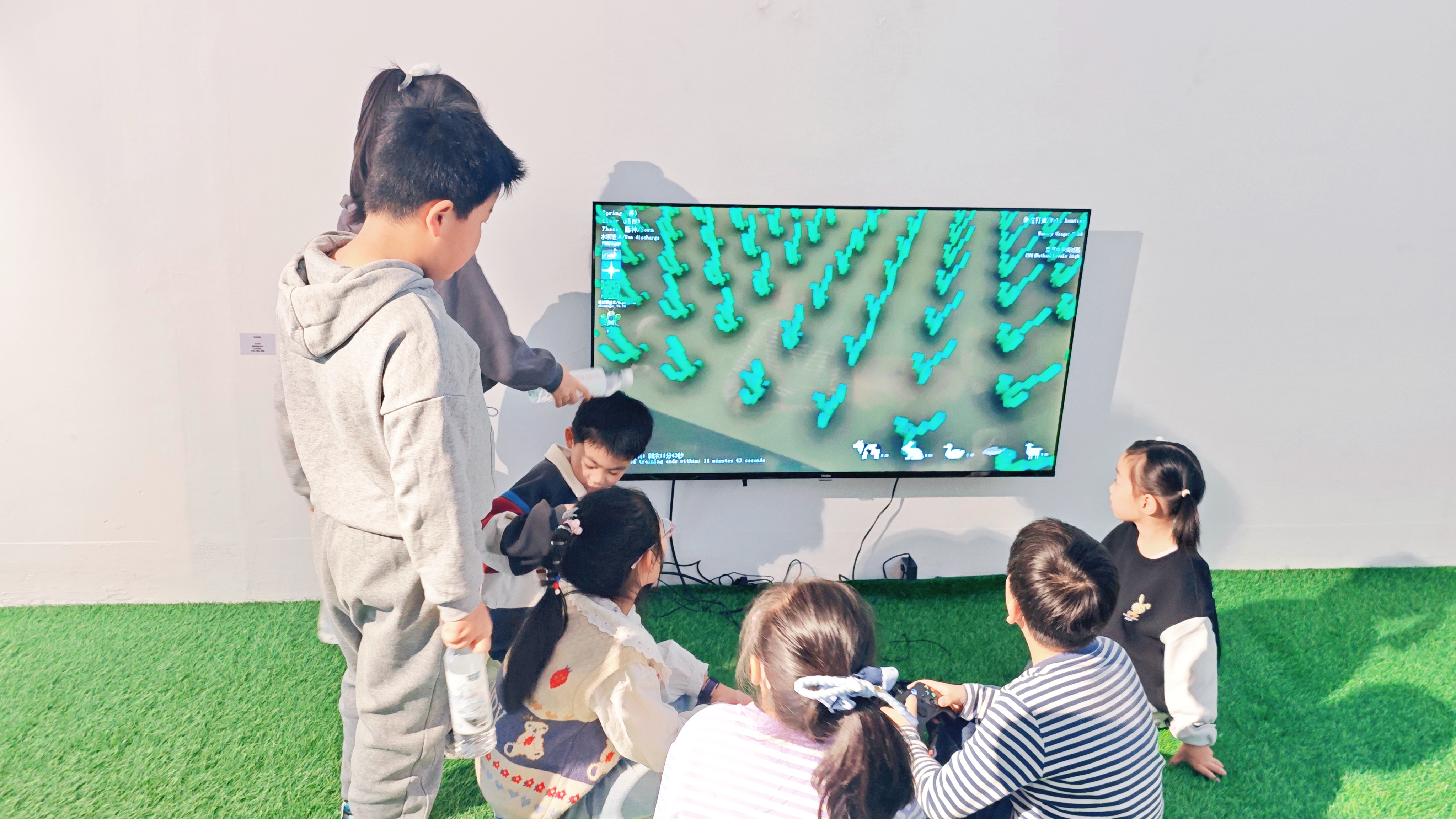
AI Farm Programming Simulation System, Interactive Device Controllers, Hay Bales, Screens
This project aims to simulate a virtual digital farm through computer technology: artificial intelligence will be responsible for maintaining the ecological balance between animals, plants, soil and water, which serves as a prerequisite for agricultural production. On the basis of ecological balance, smart contracts will be signed with the AI farm to ensure that the exploitation of nature will not be damaged by capital-driven profit-seeking behaviors.
The work is also a debate: to what extent should human management rights be ceded to algorithms to rebalance the world? How should humans adjust their position among themselves, AI and nature?
Han Yang
A digital art creator born in Hefei, Anhui Province. He currently works and lives in Wuhan. He obtained his bachelor's degree from the China Academy of Art in 2015 and his master's degree from the Accademia di Belle Arti di Brera in Milan in 2020. His artistic practice is rooted in the continuous exploration of the boundary between reality and fiction.
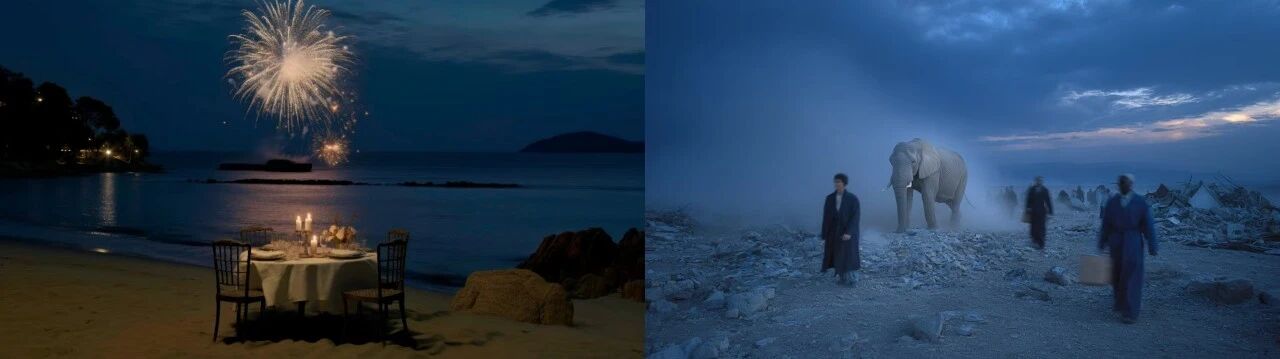
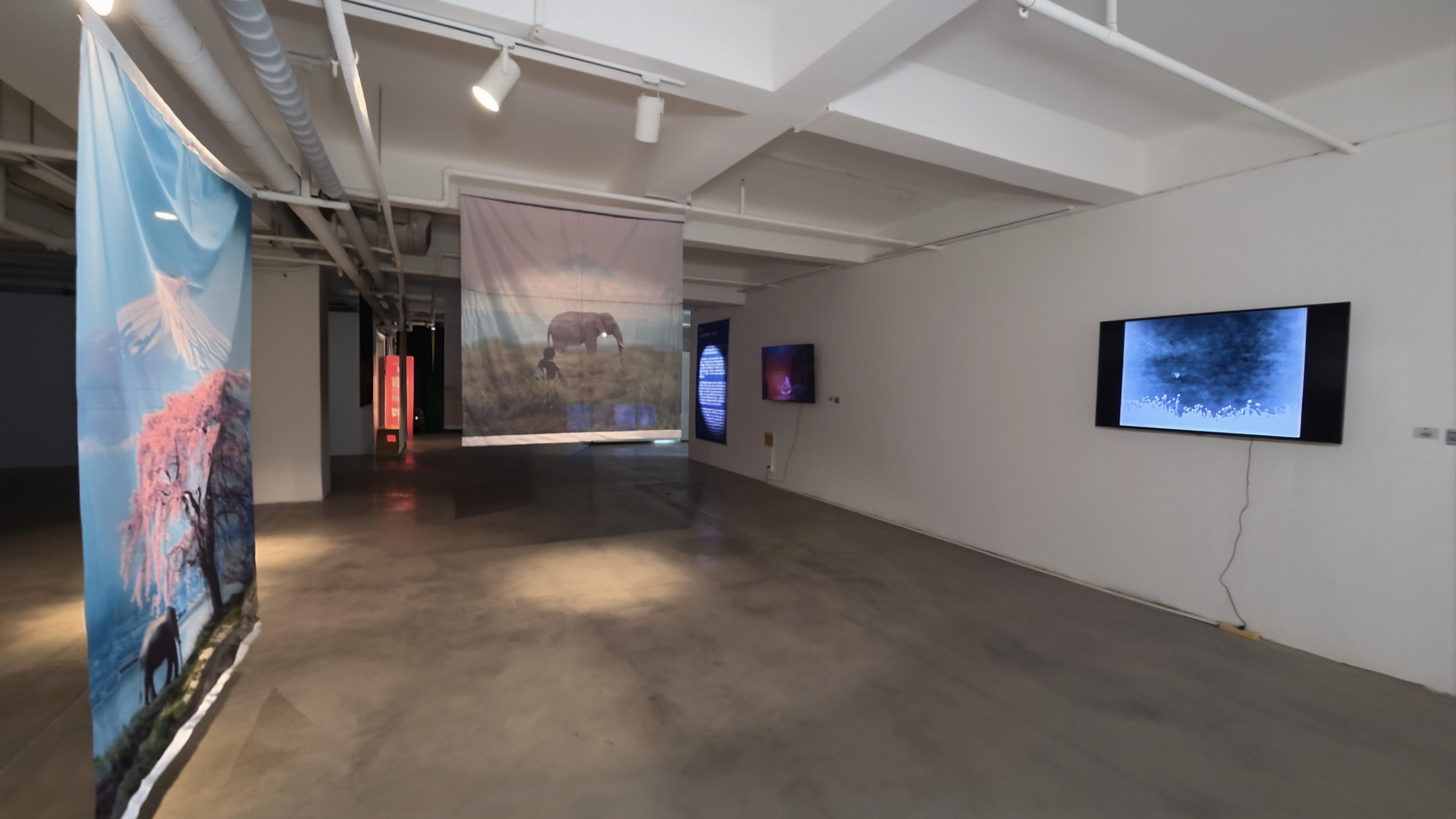
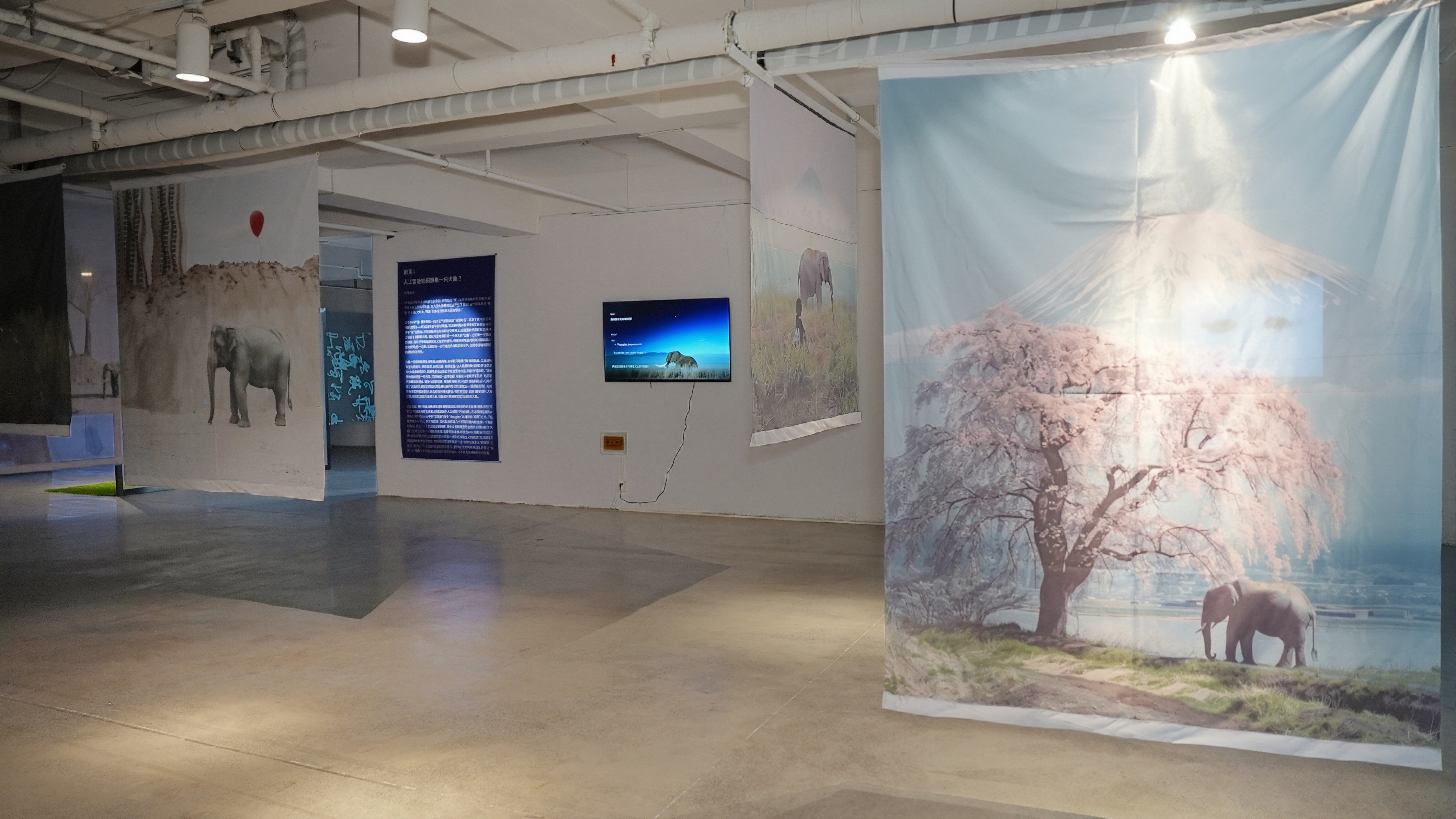
No Zoo in Manzhouli
There is no zoo in Manzhouli (Video Still)
Video, 2 min 48 sec // 4K / 60 FPS
2025
The creative starting point of this film stems from the unsubstantiated rumor that runs through the entire movie An Elephant Sitting Still—"There is an elephant in Manzhouli. It just sits there, ignoring everything."
In the repressive and despairing realistic context of the film, this rumor becomes the only spiritual sustenance for the characters, a illusory sanctuary far away. The tragedy of Sisyphus lies in the fact that he clearly knows the solidity of the boulder and the emptiness of the mountain top; his greatness lies in the act of resistance embodied in the "process" itself.
Yet the predicament of the "Manzhouli elephant" is far more fundamental and paradoxical. The seekers are not pushing a tangible boulder, but chasing the shadow of a lie that may have never been true from the very beginning. This is not a discussion about "process versus outcome", but an inquiry into "whether the object of pursuit even exists".
If the ultimate goal for which one strives, sacrifices, and even triggers conflicts is inherently absent, then on what foundation can the significance of the process be established? It reveals both the absurdity of existence and the tragic dislocation of faith—much like the desperate struggle of a person drowning in a dream.
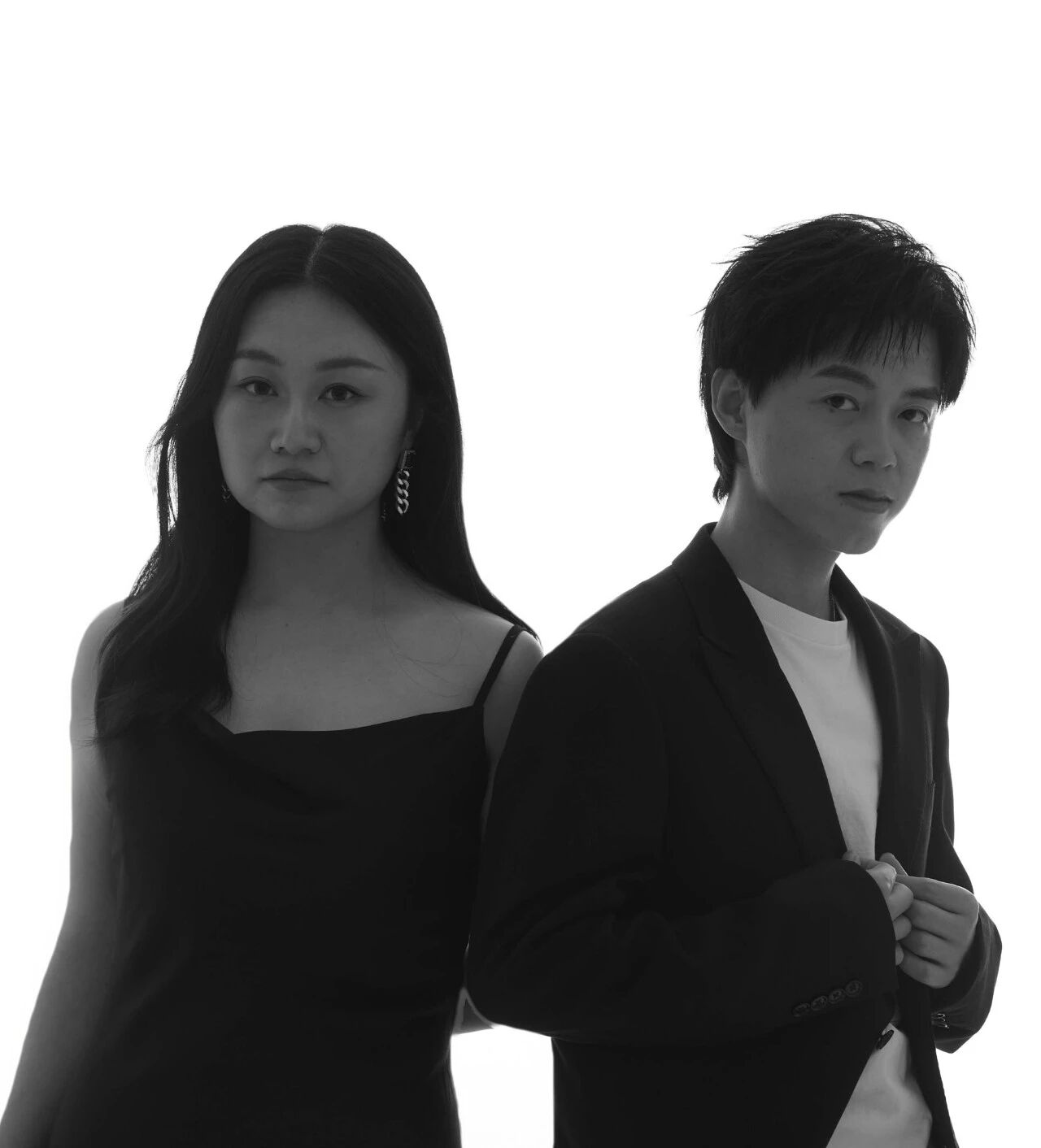
Ren Qingqi & Xu Chaofan
An interdisciplinary artist duo jointly formed by Xu Chaofan and Ren Qingqi, they are committed to exploring the possibilities where agricultural ecology, new media art and technology intersect. They regard agriculture as a medium for activism and artistic practice, employing a variety of forms including biomaterials, installations and videos to probe into the sustainable development of nature and society. The SITOPIA initiative they launched integrates art, technology and agricultural experiments to create new sensory experiences, prompting a re-examination of the relationships between humans and nature, as well as technology and ecology through innovative approaches.
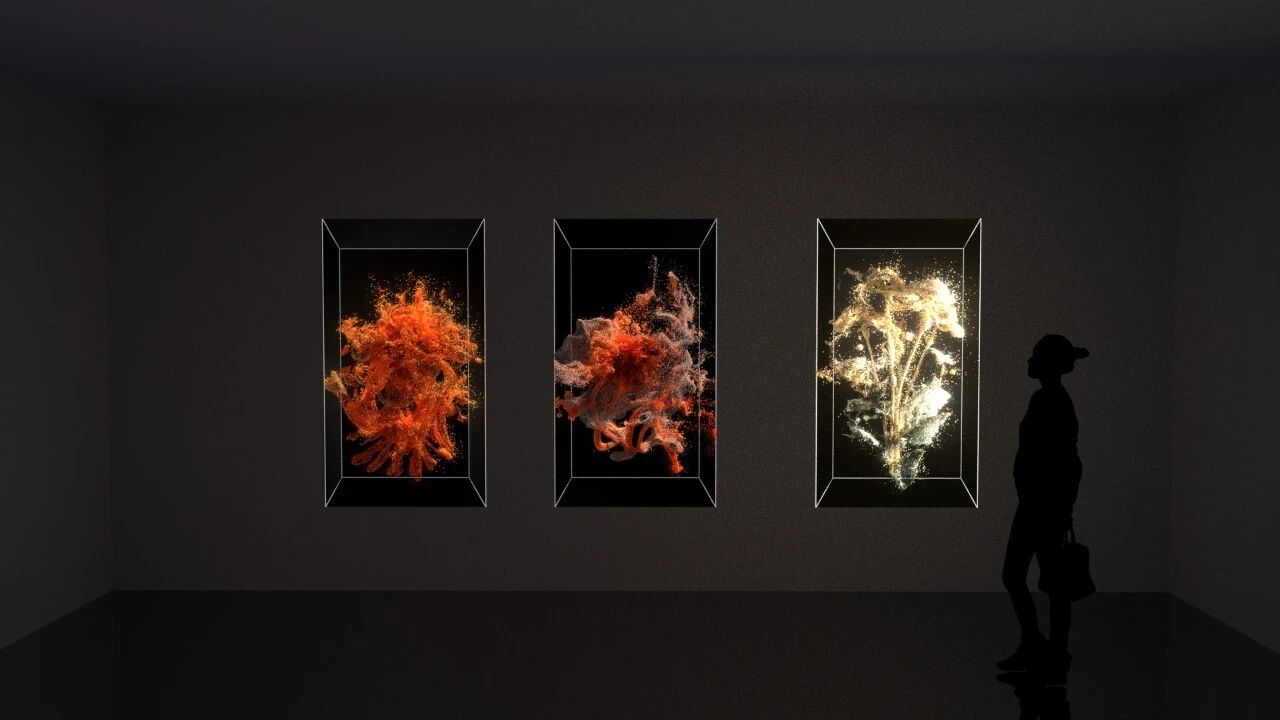
Concept Diagram of Future Flora Illustrations On-site
This work explores the potential evolutionary paths of plants in future environments. Drawing on the morphological features of plants documented in ancient texts, it deconstructs and reorganizes them through artificial intelligence to simulate the adaptive changes of plants in future ecosystems characterized by extreme climates, pollution and other stressors. The result is the creation of plant imagery that blends historical allure with futuristic sensibilities, as the artists and AI collaboratively envision an Illustrated Compendium of Future Flora.
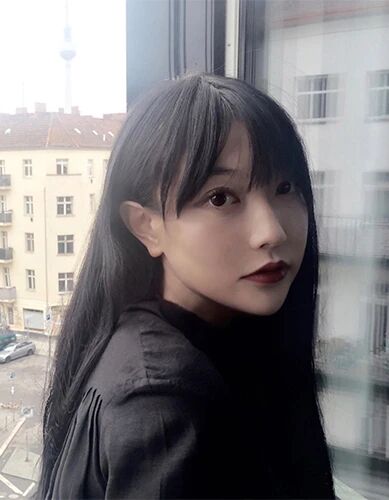
Shi Ruini
An animation director who works and lives between London and Hong Kong. Her artistic practice explores the theme of virtual intimate relationships, and examines the delicate compatibility between humans and emerging technologies through narrative expressions. She obtained a Bachelor's degree in Interactive and Moving Image from London College of Communication, and later earned a Master's degree in Animation from the Royal College of Art.
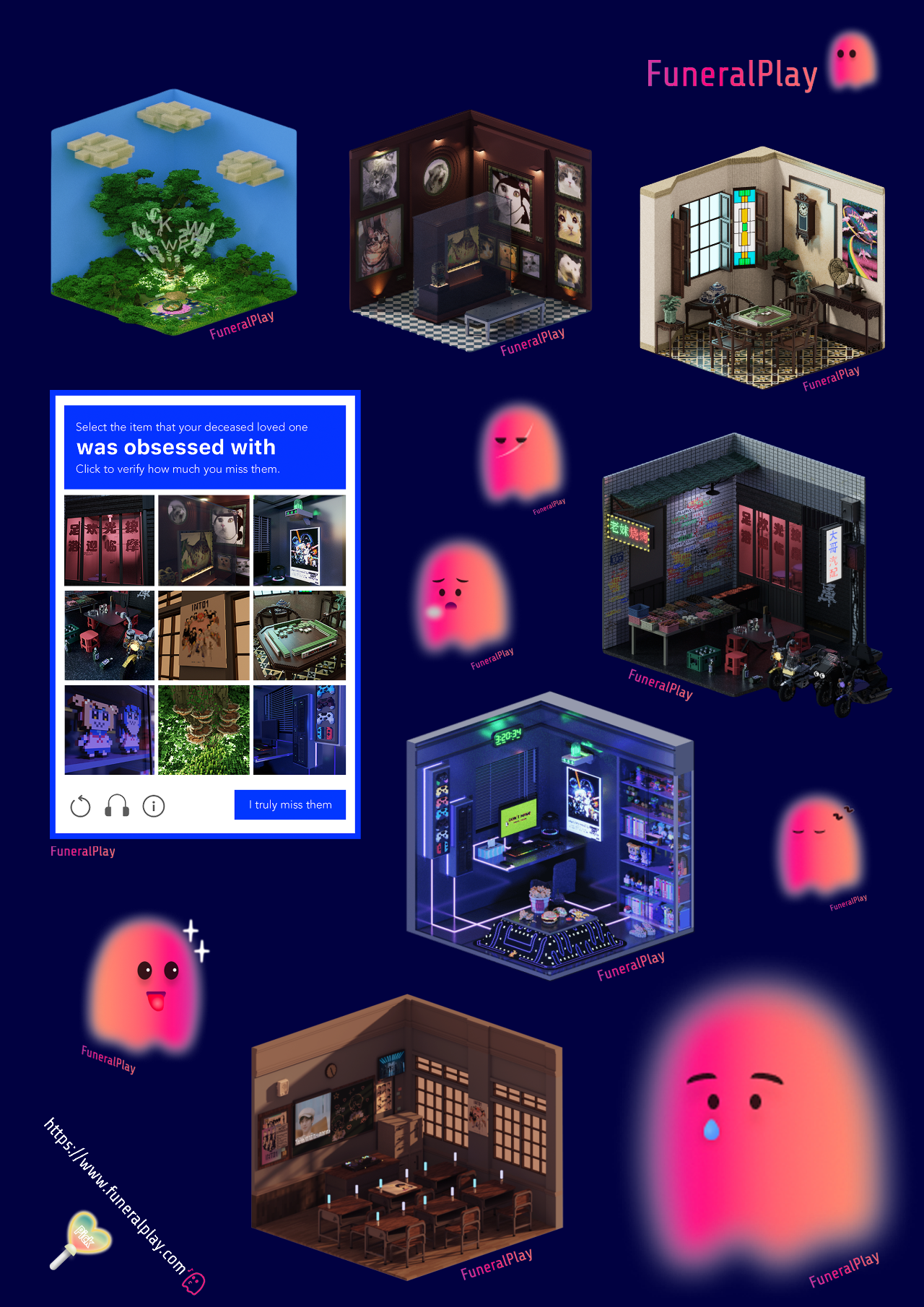
FuneralPlay, Interactive Website, 2021
This project is funded by the Goethe-Institut, the Creative Europe Programme of the European Union, the European AI Lab, and the Federal Ministry for Arts, Culture, the Civil Service and Sport of the Republic of Austria.
FuneralPlay is a virtual funeral simulation platform. By reimagining the digital forms of death and commemoration, it provokes profound reflections on the transformation of future heritage, death, and interpersonal relationships.
In this era of rapid digital development, through a series of interactive scenarios, the platform invites users to explore how digital heritage shapes and reconstructs the relationships and memories between us and others in the Web 3.0 era.
FuneralPlay raises a profound question about the future of human relationships: in an increasingly technology-dependent world, how will our death, heritage, and interpersonal relationships evolve?
This project challenges traditional forms of commemoration, prompting us to contemplate how digital heritage—especially heritage presented via NFTs—will change our perception of death and ways of mourning in the future.
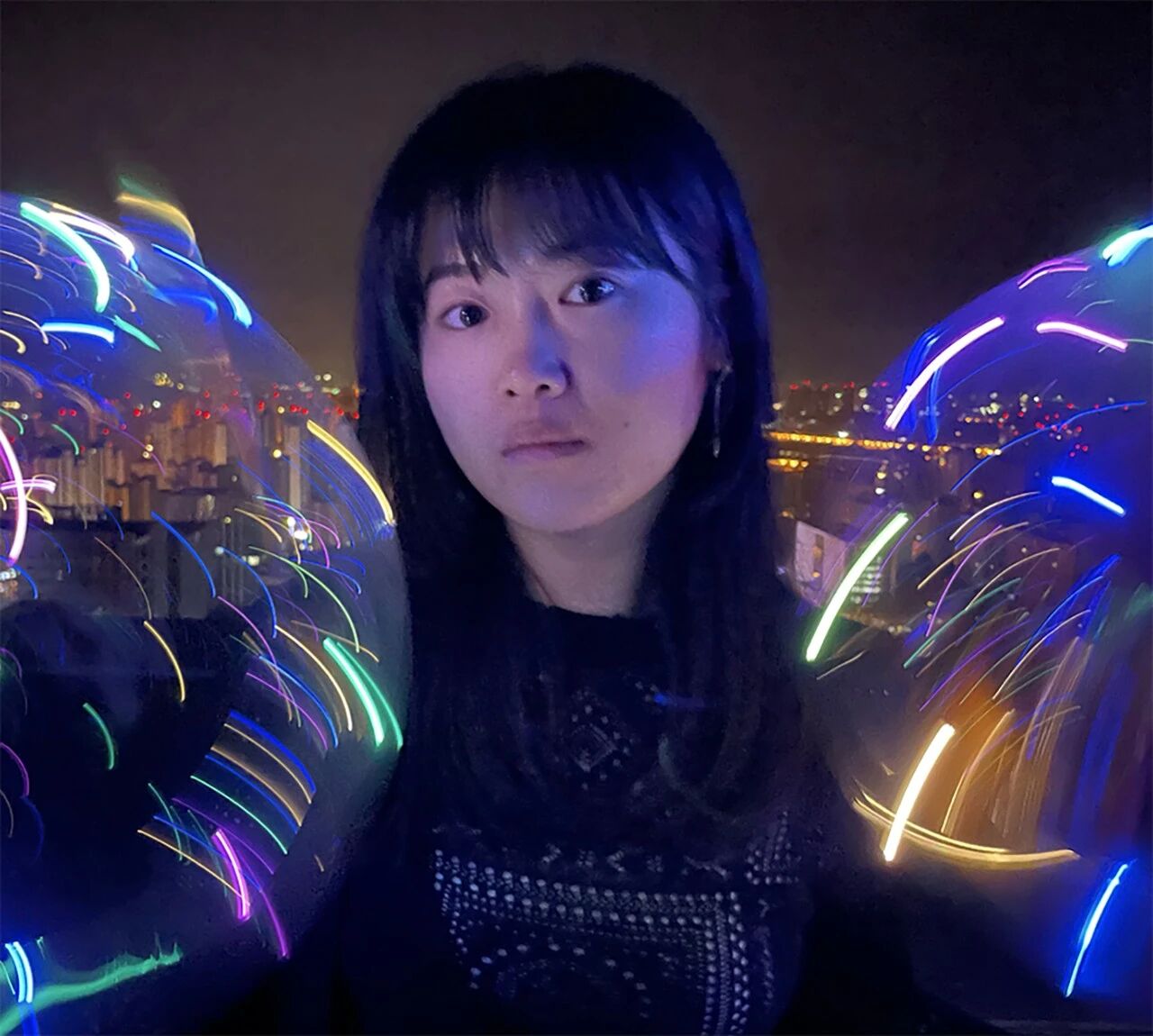
Xu Zhengyue
Born and raised in Heilongjiang, China, she currently lives and works in Beijing. She holds a postgraduate degree from the Central Academy of Fine Arts.
Xu Zhengyue’s artistic practice primarily encompasses video, animation and photography, while also extending to artificial intelligence and new media interactive installations. Her works maintain a long-term observation of the changes in social reality, on the basis of which she constructs visions of the future. Focusing on human predicaments and spiritual sustenance amid the rapidly changing social environment, she adopts methods such as on-site social research and media studies to conduct artistic expressions through poetic imagery. She explores the inherent semantic connections beneath the surface of various images, attempting to move from the tangible to the intangible.
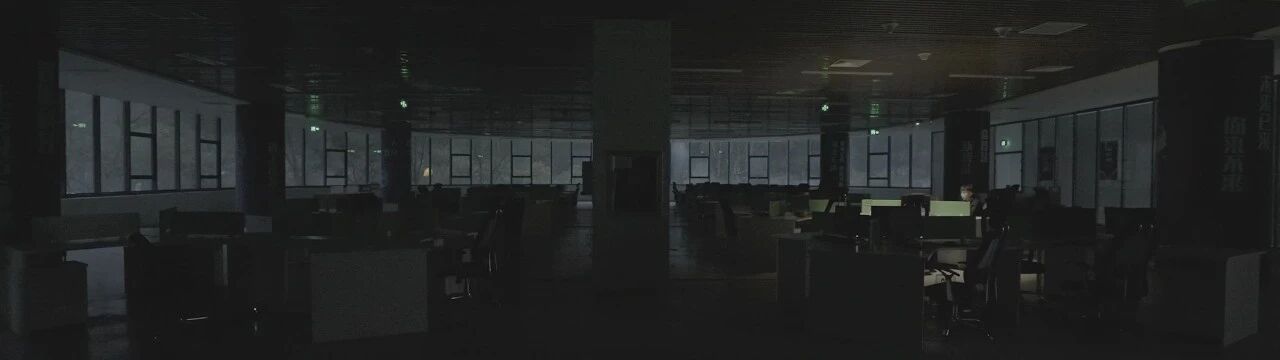
Moving Clouds, Migrate to the Cloud (Video Still)
Dual-screen 4K Video, 18 min 31 sec, Color with Sound,
2022
A technological revolution propelled alongside bubbles of hype. Beneath the mysterious veil of intelligent algorithms lies a data annotation production line, where the bodies and consciousness of annotators linger in cloud-based data. Breaking free from the purely technical focus on artificial intelligence, the film explores the broader and deeper relationships between body and spirit, technology and labor, physical geography and technological infrastructure, observing an ongoing evolutionary migration toward the "cloud".
With a poetically slow rhythm, the film gazes at the portraits of laborers on the digital production line and the grand landscapes of production. The rapid development of new technologies has caused the human spirit to become disoriented in the chaotic external world, and the film attempts to arouse people's inner perception. Through the time and space of the moving images, the artist hopes to create an extended space that acts more directly on human senses, leading to a mysterious intangible realm—where everything germinates and permeates in the flow of the footage.
Yu Youyang
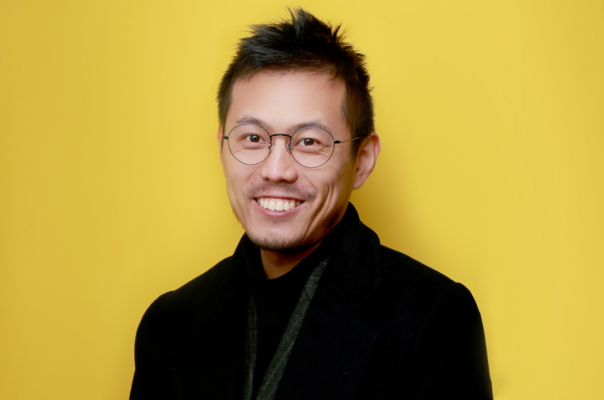
Born in Qingdao, China in 1991, Yu Youyang is an independent animation director, art educator, and co-founder of the Beijing Fanqi Animation Week. He graduated from the Royal College of Art in the UK. His works have been selected for numerous international film festivals and are included in the collections of the British Film Institute (BFI) and the Li Xianting Film Fund.
Currently dividing his time between China and the United States, Yu is committed to exploring the healing power of animation in emotional visualization and the integration of diasporic identity narratives through the combination of AI and interdisciplinary creation.
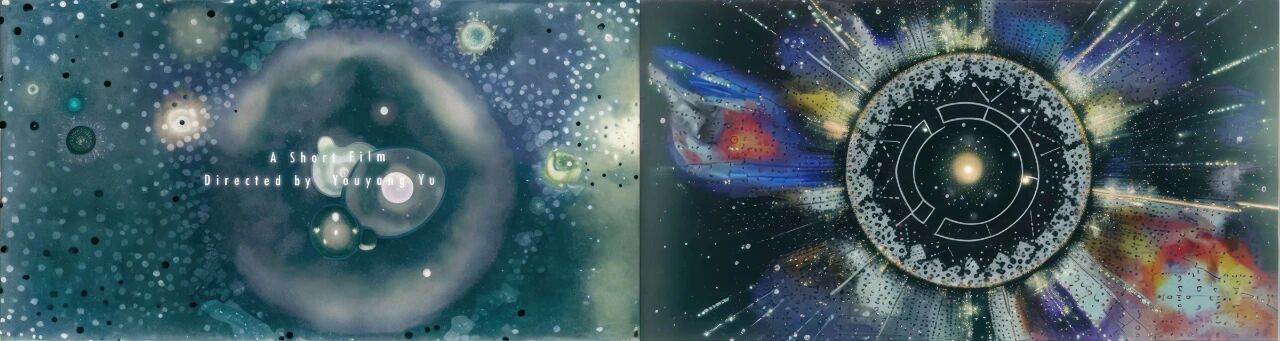
Begin with Pieces (Video Still)
3 min 03 sec, US, 2023
Begin with Pieces (2023), adapted from Yuko Taniguchi’s poem of the same name, is an animated short film directed by Yu Youyang. Clocking in at three minutes, the film unfolds in a synesthetic spiritual space, creating an introspective, magnificent and mysterious visual experience by integrating innovative AI technology with abstract painting and flickering computer vision. As a group of teenagers recite the poem in soft voices, the short film builds a meditative atmosphere that embodies the internal experience of emotion and self-expression.
Zeng Chen
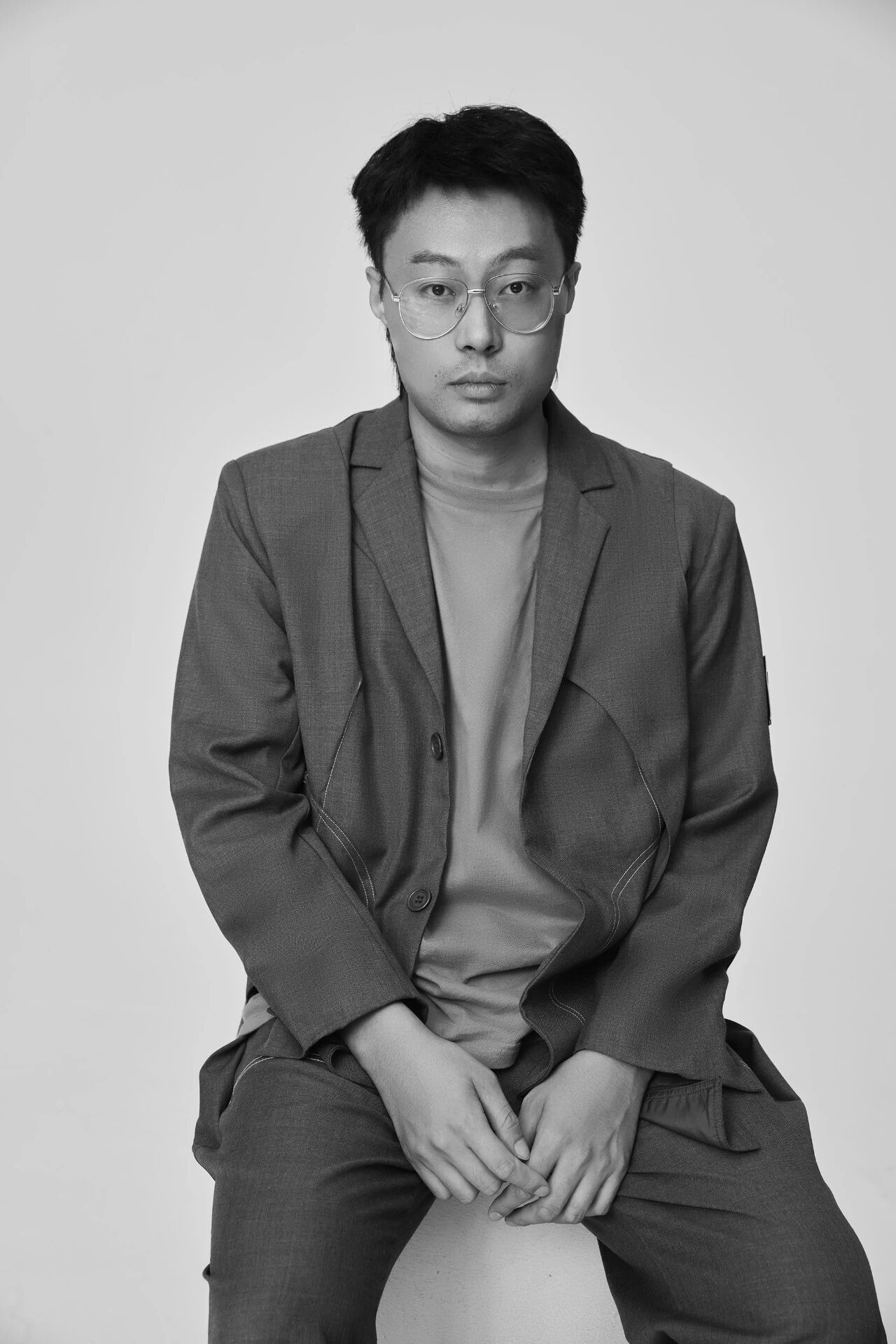
An emerging new media visual artist born in the 1990s. Her works mainly focus on the existential changes and interactions of virtual-era concepts in new contexts, as well as the exploration of authenticity and falsity. Applying various forms of artificial intelligence technologies, she attempts to probe into new collaborative modes between art and technology. Her creative practice engages in cross-disciplinary creation through content produced or disseminated in any digital medium.
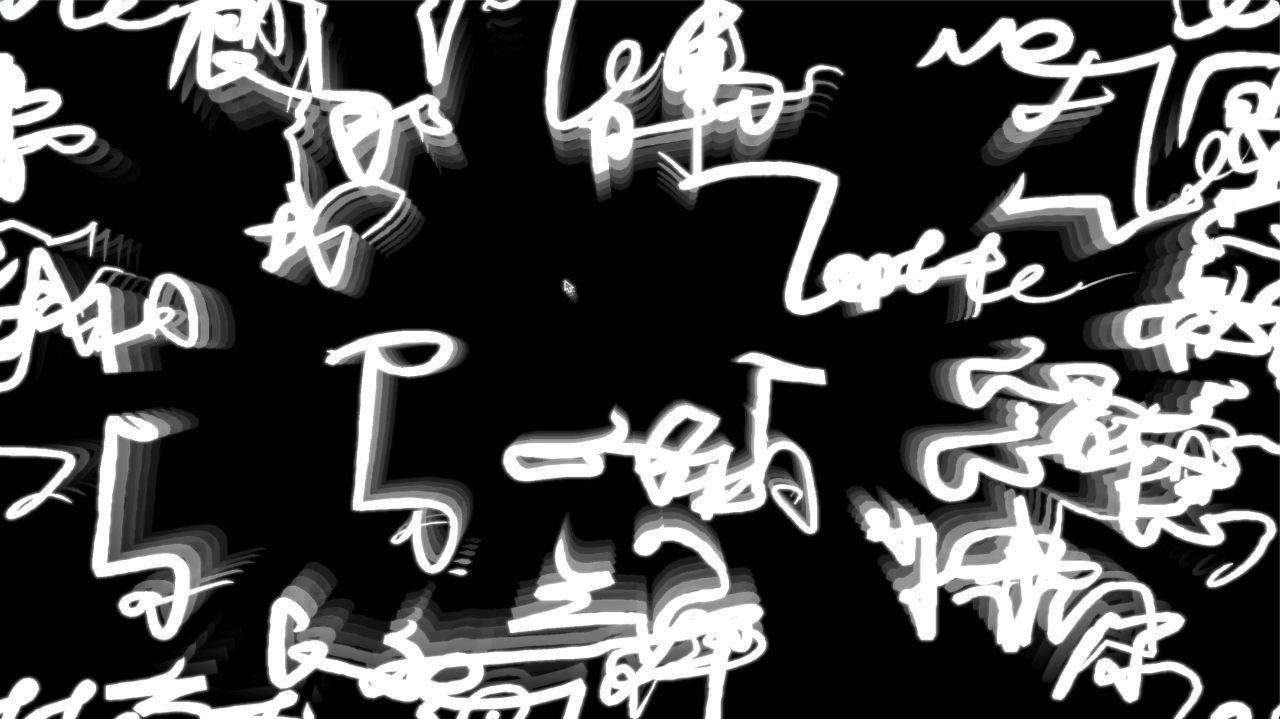
Freshly Squeezed Self-Generation – Electronic Diary (Video Still)
Single-Channel Video, 2020
Calligraphy Stroke Deconstruction Program
After a character is written, it transforms into abstract moving lines,
scattered and rearranged.
Under the new digital media system,
self-expression has undergone multiple rounds of formal innovation.
For artists,
conveying complete emotions
has gradually become a complicated endeavor.
Some feelings are no longer suitable to express;
some emotions have become hard to articulate.
Let the words fade away and dissipate—
perhaps this is equally romantic.
· Exhibition Venue ·