Similarly, contemporary artistic phenomena—from creation to presentation and dissemination—are generally trending towards compromise and pleasing action-oriented appeals to worldly desires. The so-called value of art is increasingly determined by its suitability for social media photo-ops or its alignment with buyer preferences. This path veers further and further from art's true trajectory: ascending from material construction to spiritual edification. This phenomenon serves as the most telling
展览信息|Exhibition Information
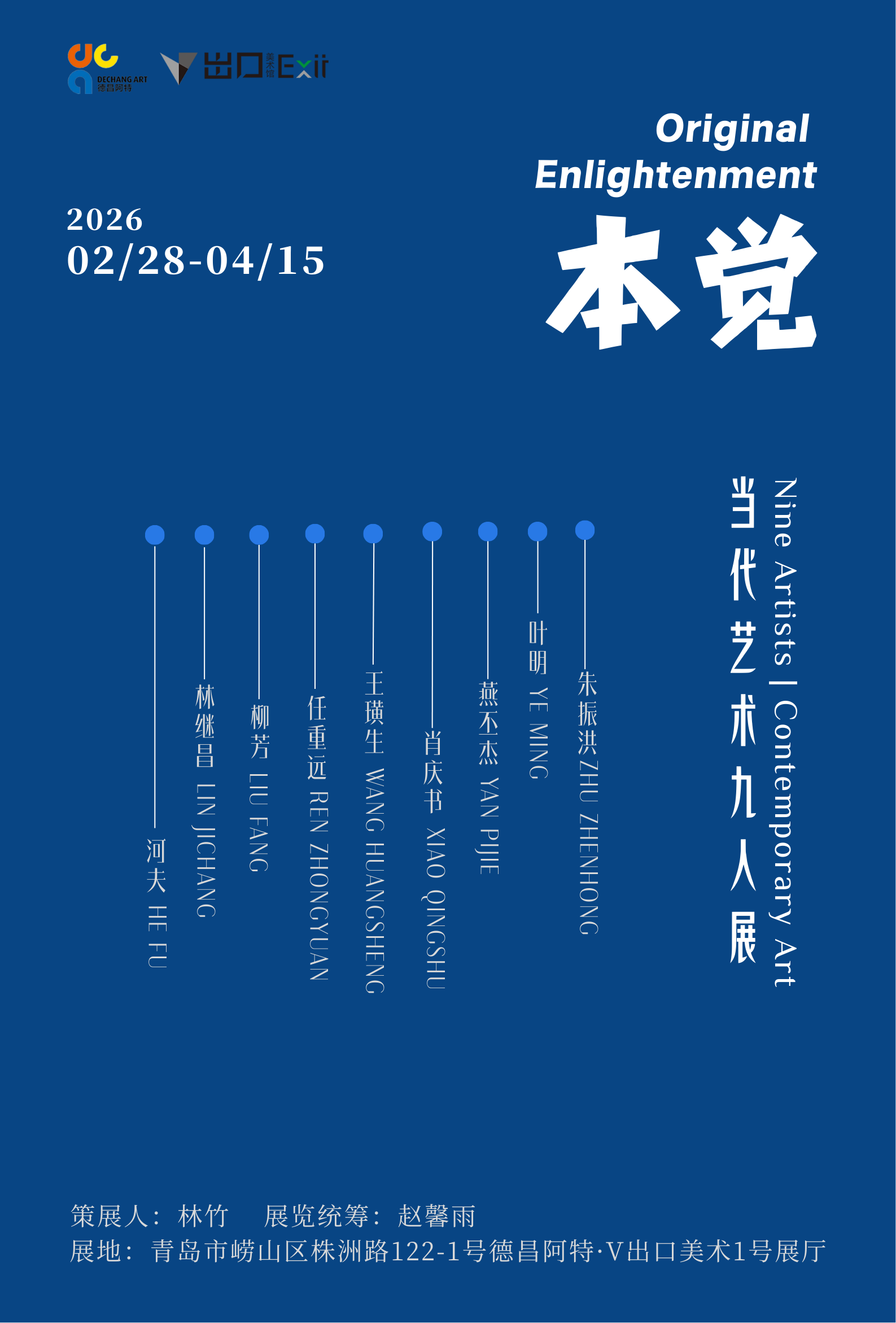
本觉—当代艺术九人展
Original Enlightenment:
Nine Artists | Contemporary Art
艺术家Artist:
河夫He Fu / 林继昌Lin Jichang / 柳芳Liu Fang /任重远Ren Zhongyuan / 王璜生Wang Huangsheng / 肖庆书Xiao Qingshu / 燕丕杰Yan Pijie / 叶明 Ye Ming / 朱振洪 Zhu Zhenhong
策展人Curator:
林竹Lin Zhu
出品人Producer:
王芳Wang Fang
展览统筹Coordinator:
赵馨雨Zhao Xinyu
展览时间|Duration
2026年02月28日 - 2026年04月15日
展览地点|Venue
青岛市崂山区株洲路122—1号德昌阿特·V出口美术馆1号展厅
Gallery 1,DCA·Exit V Museum,No.122-1,Zhuzhou Road,Laoshan District,Qingdao City
Exhibition Preface
The Innate Enlightenment and the Comfort of Being
By Lin Zhu
It is an indisputable fact that the relationship between the individual and their environment has become increasingly ambiguous amidst a rapidly escalating movement of increased entropy. "Truths" are proliferating, only to be promptly overturned. To resist invites the fear of being eliminated; to keep up proves impossible, as the pace—of life, of existence itself—is impossible to match. Consequently, a sense of disorientation permeates both action and meaning. Humanity seems trapped in a vortex of emptiness, where all can be seen, yet the self remains invisible.
Similarly, contemporary artistic phenomena—from creation to presentation and dissemination—are generally trending towards compromise and pleasing action-oriented appeals to worldly desires. The so-called value of art is increasingly determined by its suitability for social media photo-ops or its alignment with buyer preferences. This path veers further and further from art's true trajectory: ascending from material construction to spiritual edification. This phenomenon serves as the most telling annotation of art's decline.
The exhibition "Original Enlightenment: Group Exhibition of Nine Contemporary Artists" is destined to be one that does not court popularity. It offers no visually violent backdrops designed to generate online traffic. It presents no flattering colors or topics catered to consumer preferences. There are only the quiet, contemplative "residual images" of the spirit—born from the artists' daily self-reflection—standing within the gallery. Each exists on its own terms, each murmurs to itself. It is like an informal tea conversation among a few close friends of many years: natural, spontaneous, yet unequivocal in its stance.
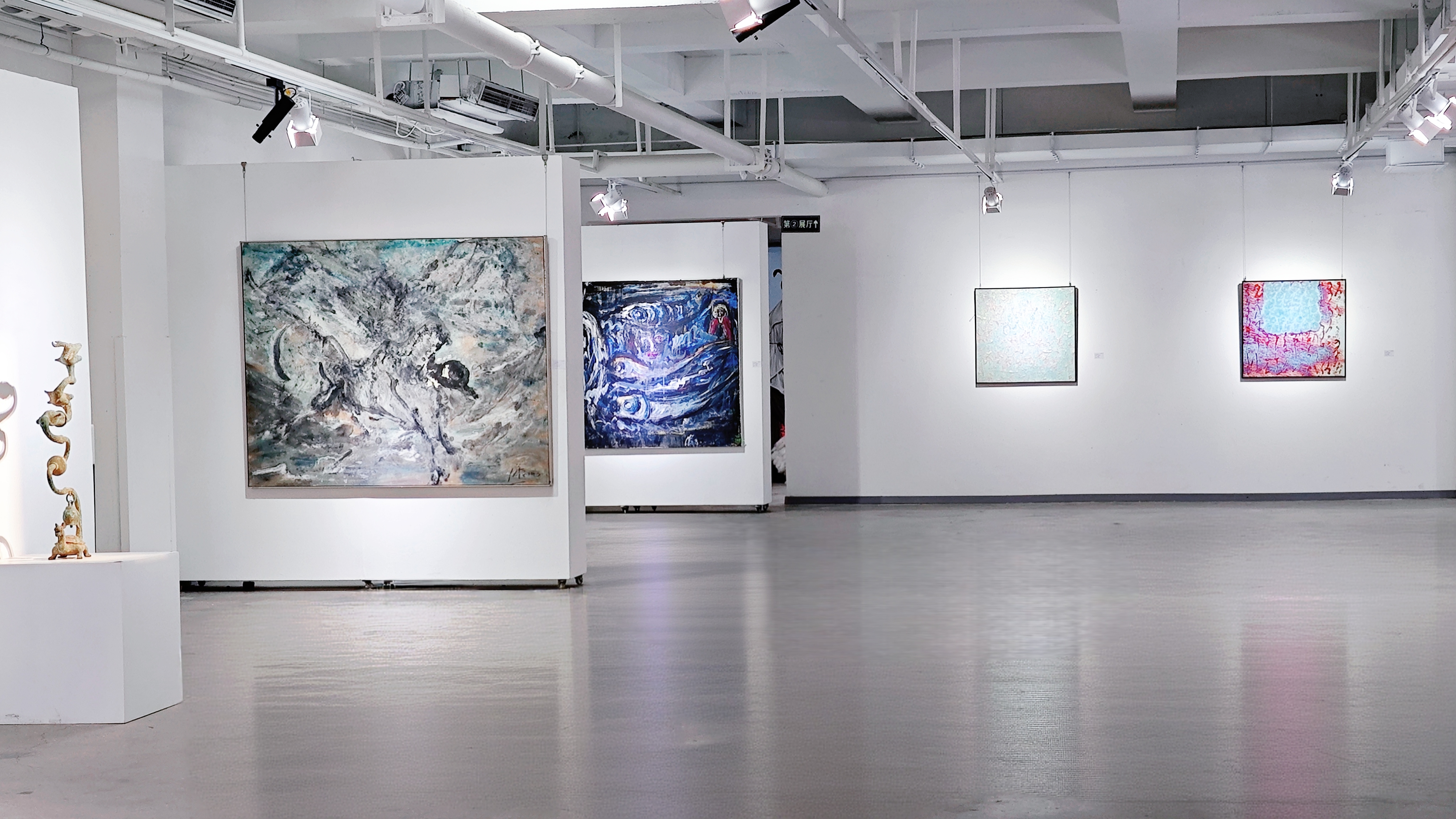
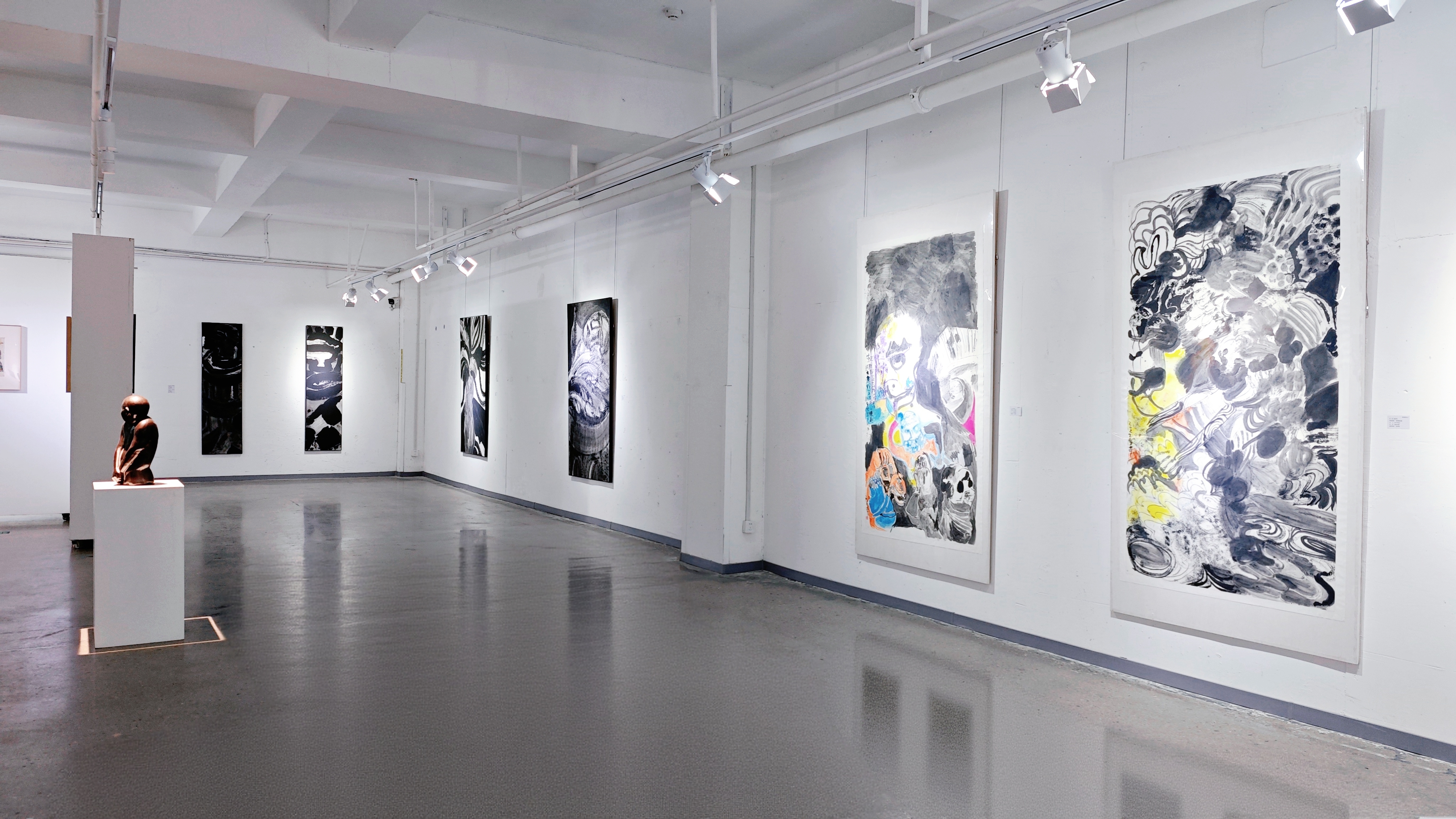
Exhibition Views
Among the works, artist Wang Huangsheng's installation Entanglement employs a documented video process to underscore his enduring commitment to the physical experience of bodily presence. Here, the trajectory of life and all worldly affairs are distilled into the winding and tangling of a single thread. Visually delicate strips of soft pink fabric hang suspended among iron wires densely studded with thorns. Beneath the surface of a harmonious and tender scene, an atmosphere of piercing tension involuntarily emerges—elucidating the essential truth that all things in the world exist in the interplay of the real and the illusory, where fortune and misfortune are inextricably intertwined.
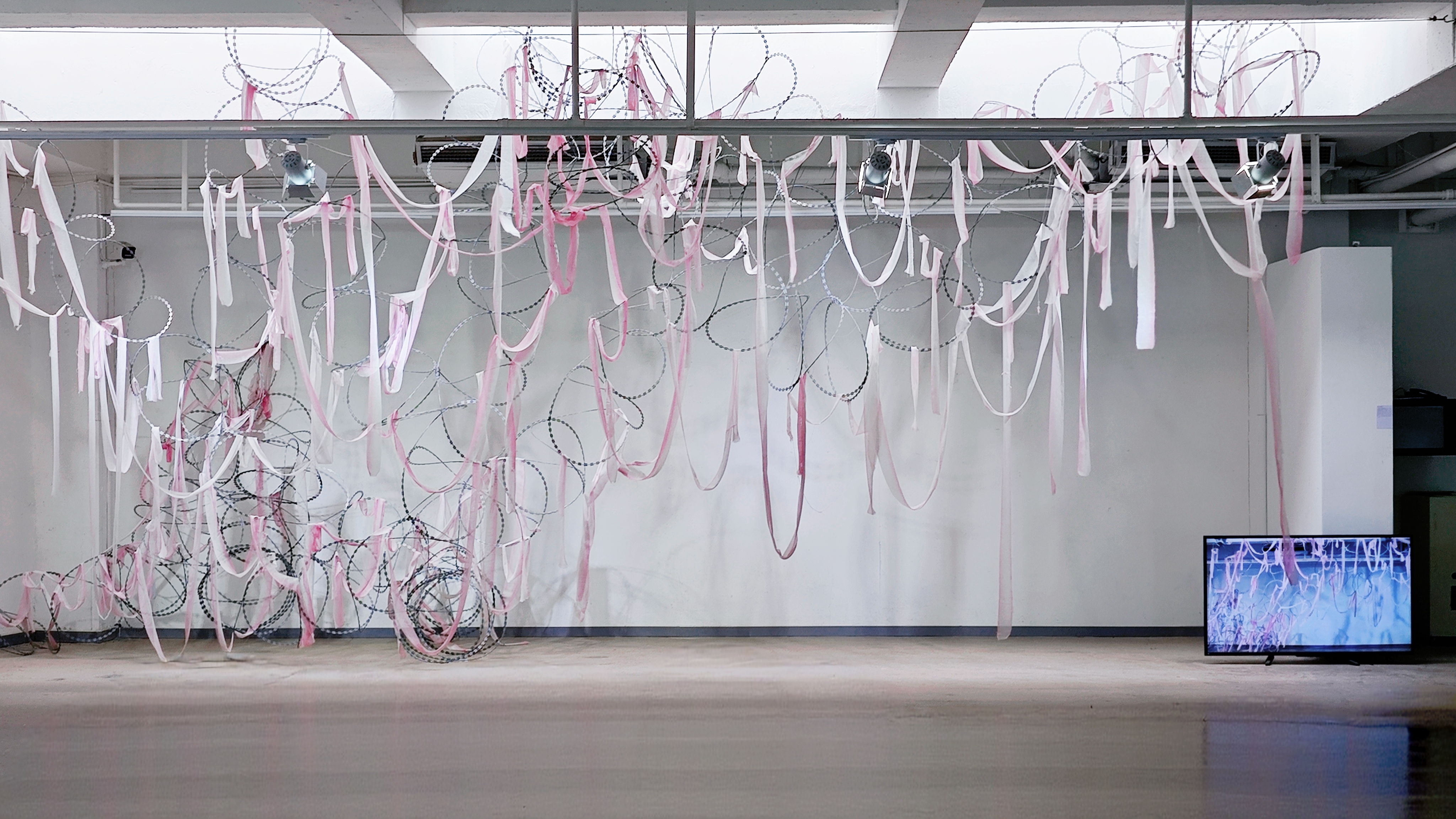
Installation View of Wang Huangsheng's Entanglement
In stark contrast, Ye Ming's film-based photographic works fabricate a false truth where "what is seen is not the real." In his Landscape of Rivers and Mountains series, we encounter grand, almost totemic scenes. Guided by our ingrained belief in the lens as an instrument of objective documentation, we naturally marvel at humanity's formidable creativity in transforming nature—yet simultaneously, a faint unease stirs, a premonition of the latent crisis that may arise from excessive intervention in the natural landscape. And this is precisely the statement Ye Ming seeks to make about how we view the world.
As we delve deeper into the work, we discover that what appears to be objective reality captured by Ye Ming's lens is, in fact, a miniature tableau—meticulously constructed by the artist to serve his expressive intent. It is a "truth" manufactured through "simulacra." A small scene, artificially created, masquerades as documentary reality.
Both Ye Ming and Wang Huangsheng begin their artistic journeys from the observation of reality. With a compassionate, humanistic warmth tinged with melancholy, they explore the relationship and essence between humanity and the world, between existence and all things. Through the pathways their works chart, they hope to guide viewers toward a shared understanding: reconciliation with the world.
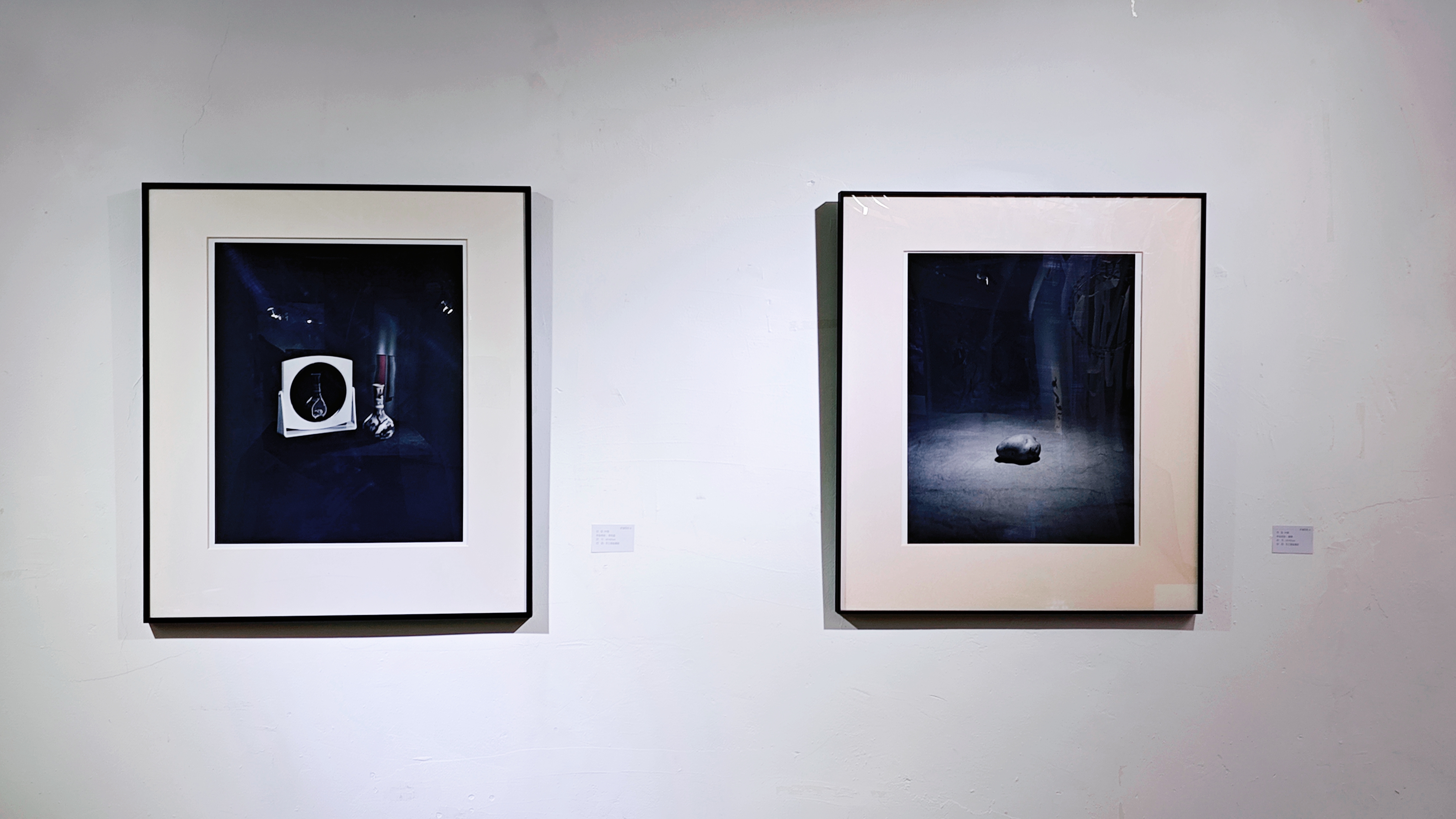
Ye Ming's Blue and White Porcelain, Still Life
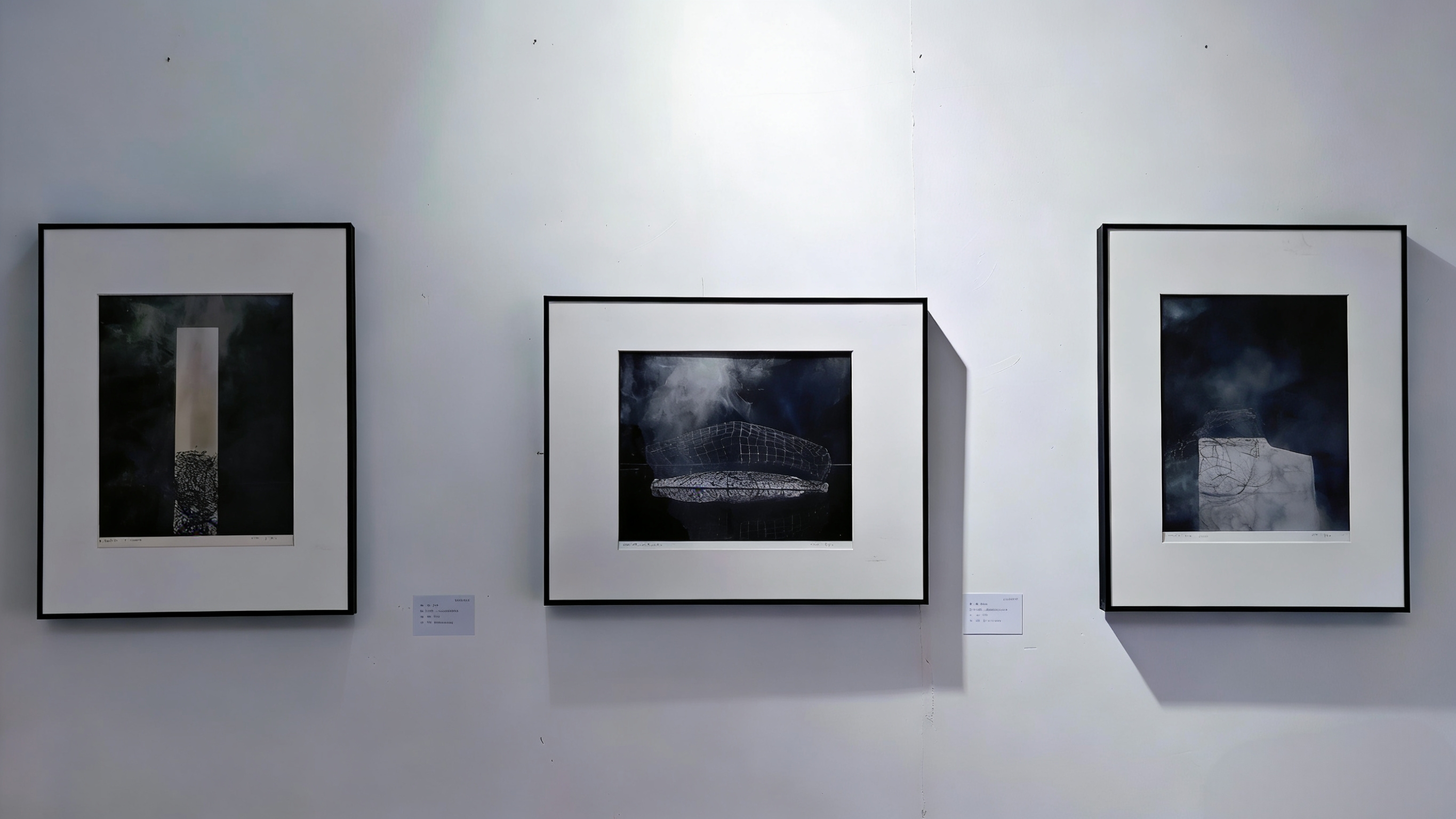
Ye Ming: Landscape of Rivers and Mountains No. 1, 2, 3 (Film-Based Photography)
Starting from individual bodily experience, Ren Zhongyuan's response is sharp and direct. His work Ritual of Crossing the Obscure Sea represents an ongoing interrogation of the meaning of life. Human existence inevitably engages with time, space, and the immediate environment—prompting conscious responses through body and emotion, responses that concern both the present and the future. These responses manifest in Ren Zhongyuan's imagery as objects both sharp and suspended, reflections that mirror Kafka's land surveyor confronting the castle: familiar and within reach, yet forever inaccessible. It is a search for light amidst the pathos and predicament of existence. The seemingly clear direction in life—reality itself—ultimately rushes toward the profound and boundless unknown of the future, our spiritual destination. Ren Zhongyuan's artistic expression echoes the Venerable Bagan's definition of life: "Life is not about becoming an expert in solving problems, but about experiencing the process."
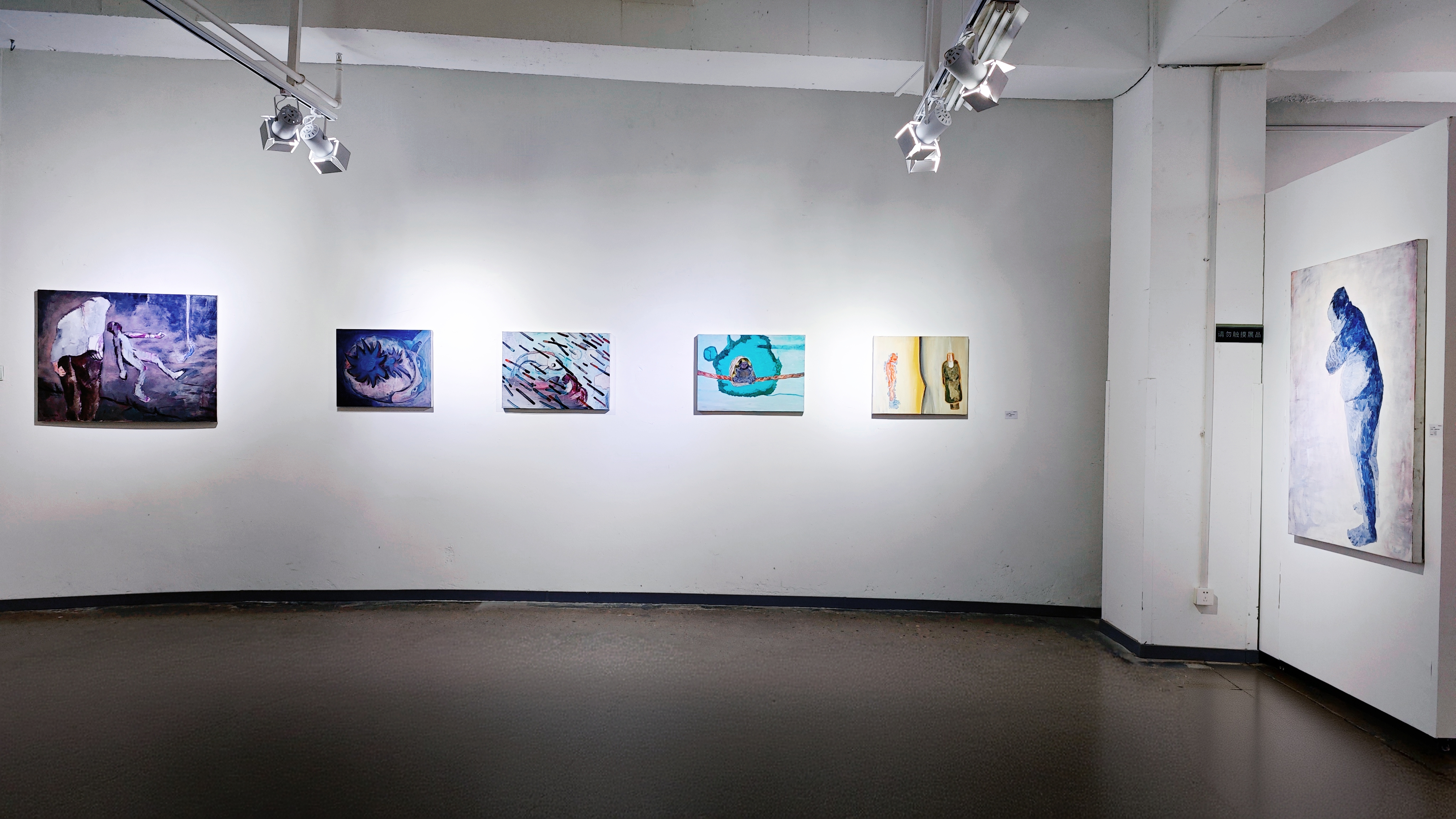
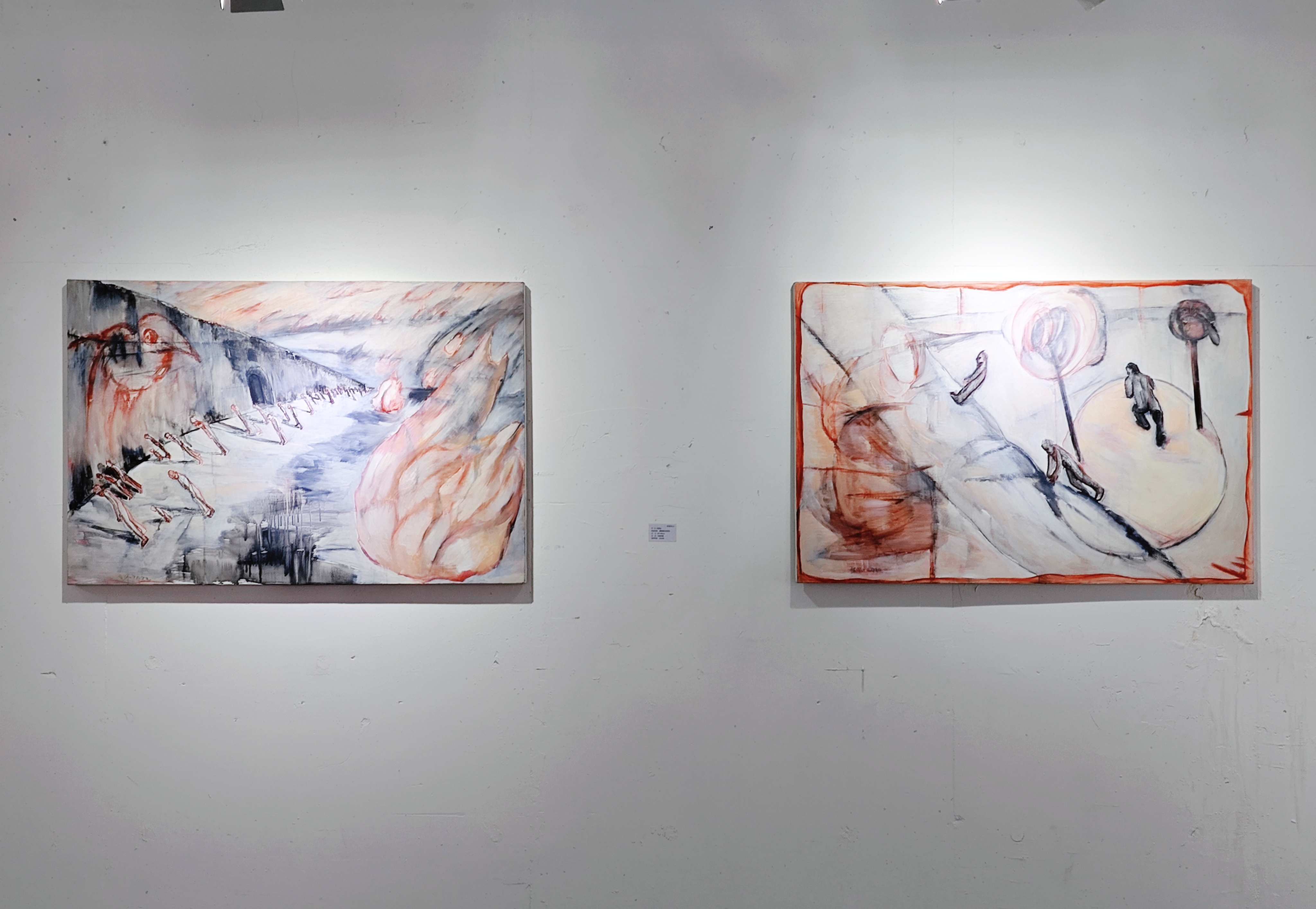
Ren Zhongyuan: Crossing the Obscure Sea Series, Acrylic on Canvas
Offering a different interpretation of Venerable Bagan's proposition, Xiao Qingshu's works present sparse woods with crystalline colors. His lines possess an extraordinary sense of relaxation—independent, each imbued with its own vitality—while the overall composition remains remarkably controlled. The world, as rendered by Xiao Qingshu, transforms into something akin to Chen Jiru's "planting bamboo, watering flowers, raising horses"—a pastoral recluse's tranquil contentment. His works become an expression of his "non-contending" attitude toward life.
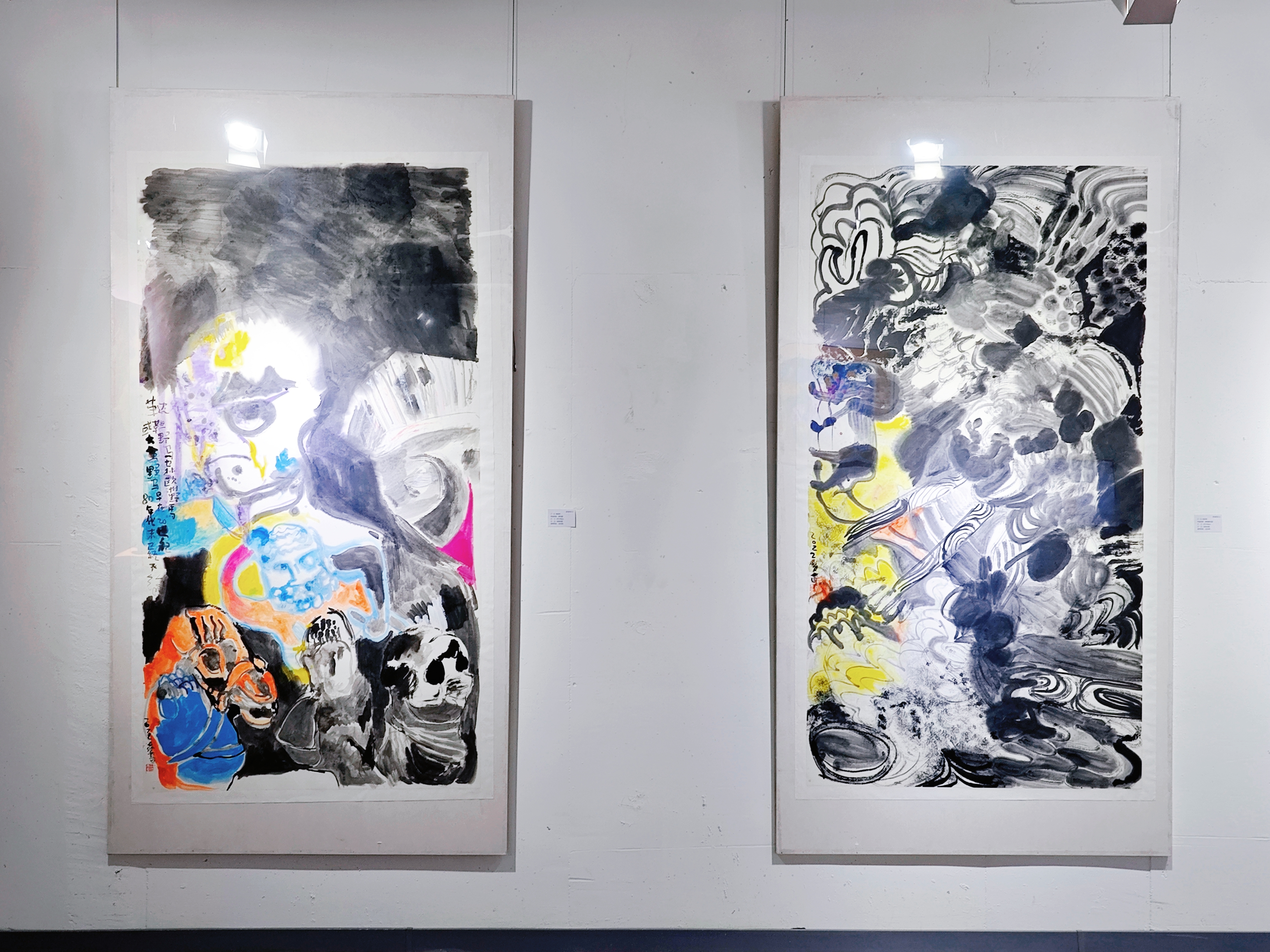
Xiao Qingshu: Wild Horses, Ink and Color on Paper
Xiao Qingshu: Divine Dragon Riding the Clouds, Ink and Color on Paper
Compared to Xiao Qingshu's reclusive tranquility, the versatile artist He Fu presents a vibrant engagement with the mundane world. The urban life circle and childhood rural memories serve as dual channels through which He Fu constantly switches—hometown recollections and contemporary expressions become the wellspring of his creative inspiration. His False Deity Record of Purple Clouds series originates from his folk memory of the ritualistic deity worship during festivals in the Chaoshan region, giving rise to self-created gods born from this cultural foundation. The rough, unrefined brushstrokes and splashed colors in his compositions contain no definable figurative symbols, only a primal, untamed energy—abundant, wild, and circulating in misty flux. This ambiguity captures He Fu's psychological entanglement between faith and reality, while also reflecting a common response in modern individuals. In Yan Pijie's work, this prevailing anxiety manifests as a conscious refusal—a perceptual reaction of deliberate rejection.
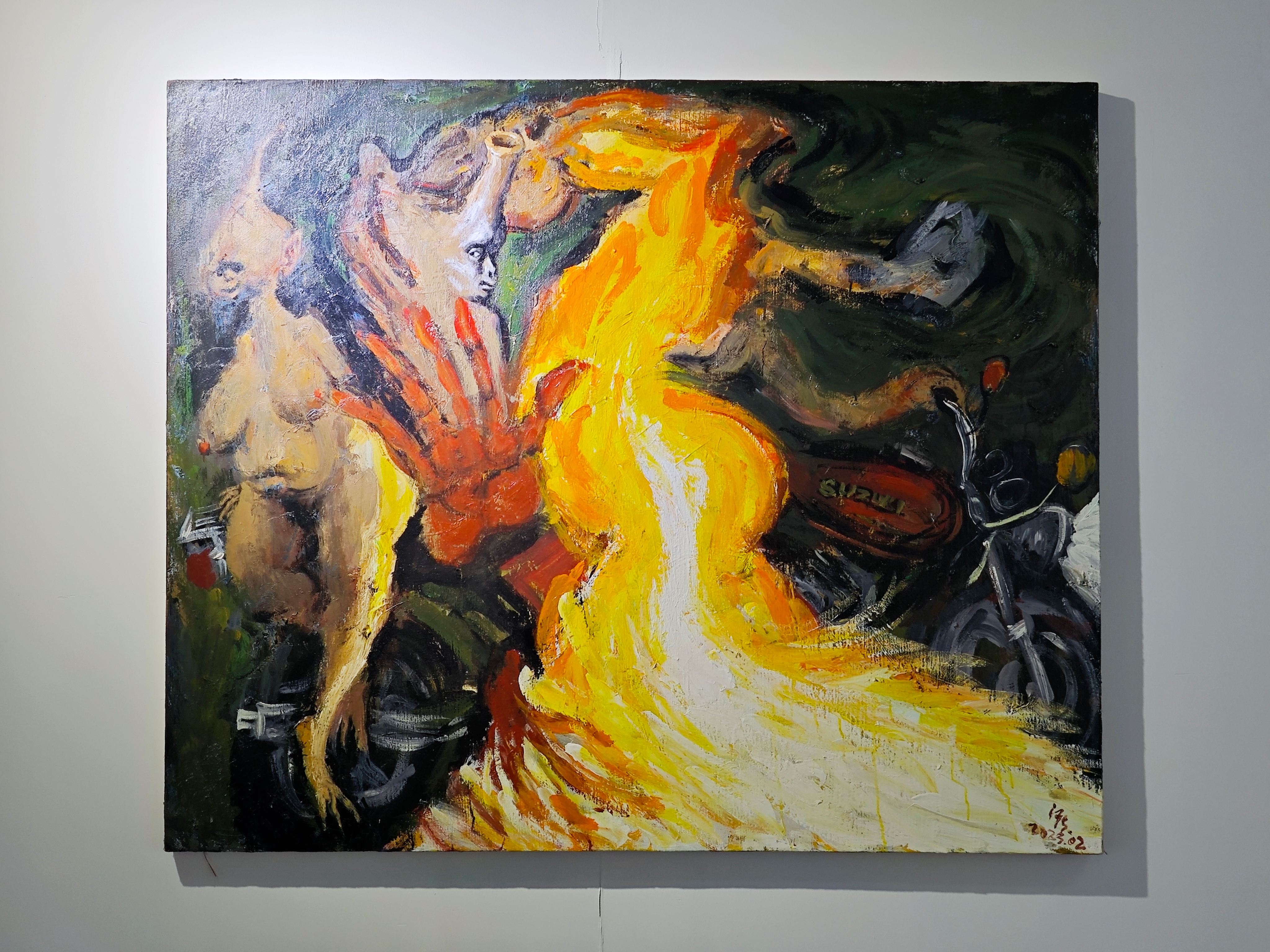
He Fu: False Deity Record of Purple Clouds I, Acrylic/Canvas (Installation View)
For some time, the figures in Yan Pijie's works have predominantly been children. In Returning Still Young, the wide-open eyes and tensed body language resemble an instinctive self-protective reaction to fear. This discomfort with the external world leads Yan Pijie to linger in the purity of a child's inner realm, thus refusing to grow up.
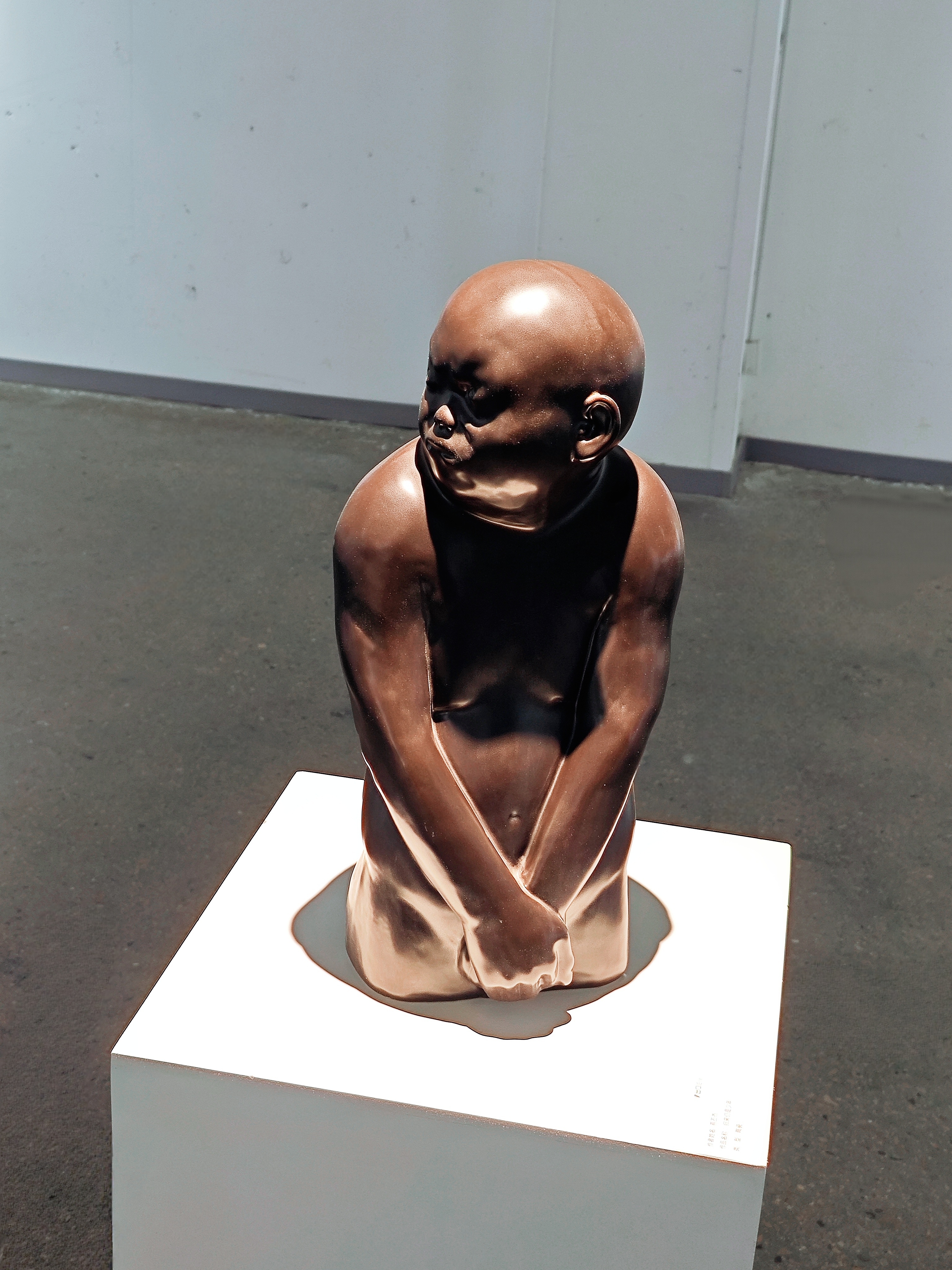
Yan Pijie: Returning Still Young, Ceramics
"A world of meaning resides in a single flower." Liu Fang's ink paintings often draw from everyday flora and still life around her. Through distorted, elongated, and overlapping lines, and the rhythmic nuances of ink, she transforms objective "objects" into introspective "spirit." In the interplay of black and white, she achieves a seamless transition from the physical to the metaphysical. Her pictorial symbols are enigmatic, imbued with profound mystery.
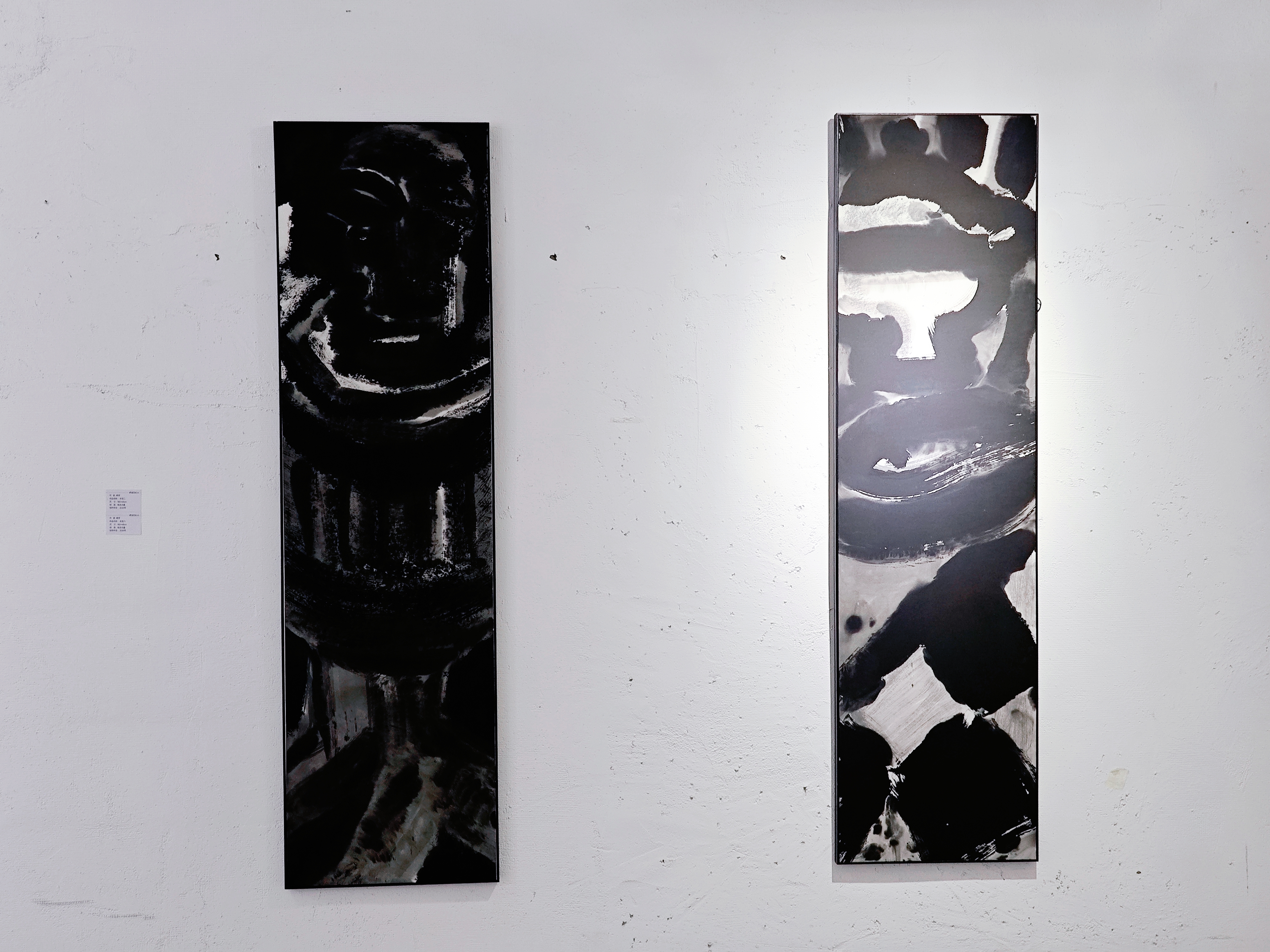
Liu Fang: Reconstruction Series, Original Enlightenment Series, Ink on Paper
Travel is undoubtedly the most direct way to comprehend the world. Zhu Zhenhong, a restless wanderer, positions himself as a detached observer navigating parallel universes. In his gaze, the divergent trajectories of civilizations across regions and the intricate weave of folk histories condense into a planar narrative of topological time. From this vision emerged the Qilin series—bronze sculptures that conjure pseudo-sacred vessels at once absurd and eerily authentic. By grafting fragments of ritual bronzes from disparate eras and functions, then subjecting them to meticulous artificial aging, he resurrects within the exhibition space an ancient, enduring aura of the divine. Through a playful subterfuge that stages fiction as palpable reality, his works hold a mirror to the dense fog enshrouding the world we inhabit.
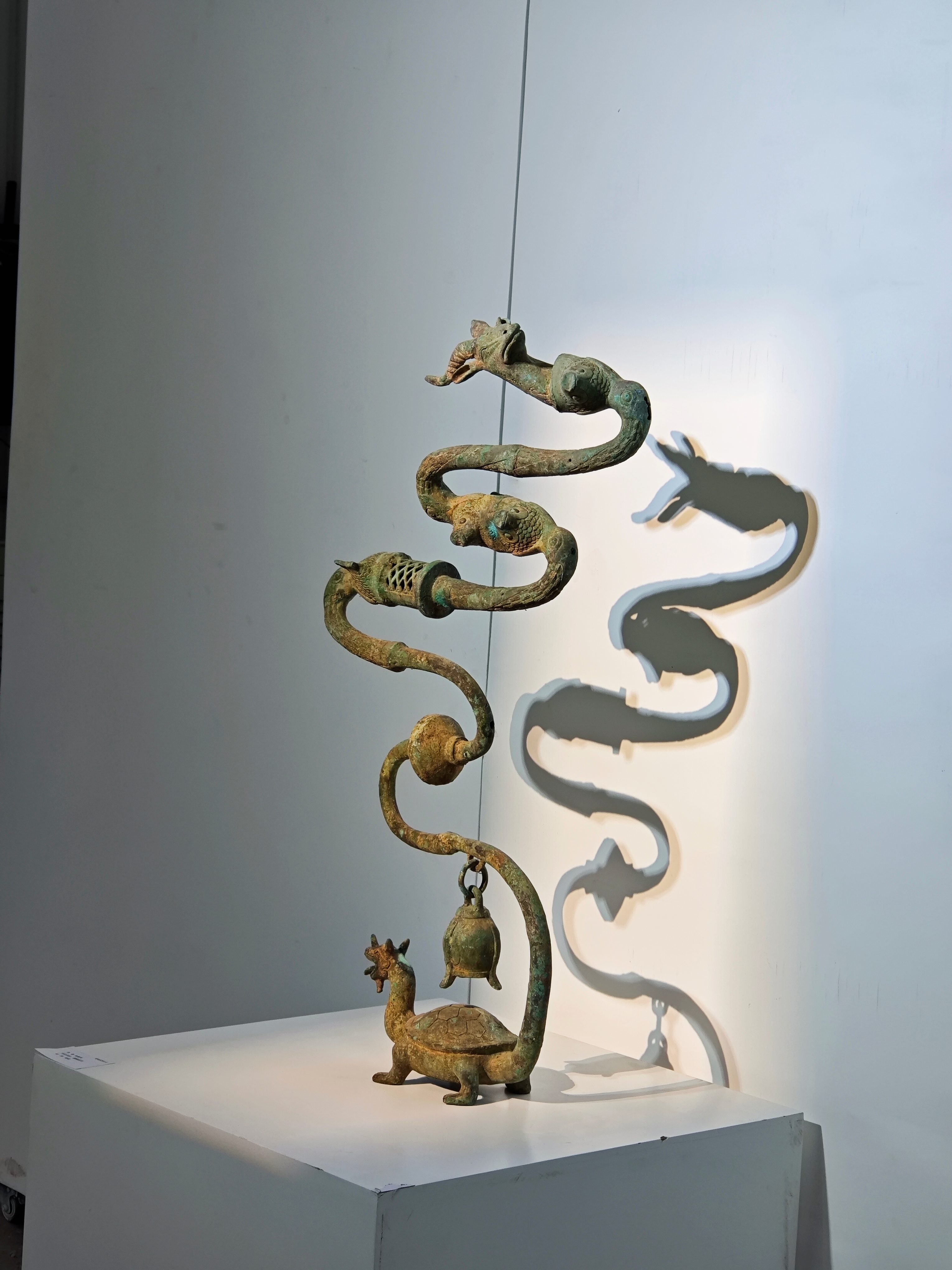
Zhu Zhenhong: Qilin Series, Bronze
Of course, in the face of a dazzling world, meditative absorption is undoubtedly the wisest course of action. Take Lin Jichang's creative process, for instance: he strives to quiet the mind's analytical activity, allowing consciousness to unfold with greater freedom. Consequently, in his work Bodhisattva's Lowered Gaze, one encounters an enormous ancient fish suspended in mid-air, with trees and birds concealed in the background, as if a Buddha gazes upon the scene through the gaps of light. The hierarchical divisions between heaven, earth, and humanity are completely dissolved by a seamlessly integrated spatial aura—a presence that, without specific, nevertheless embodies the power of signification. In silence, it radiates a gentle warmth that perceives both the cosmos and all sentient beings。
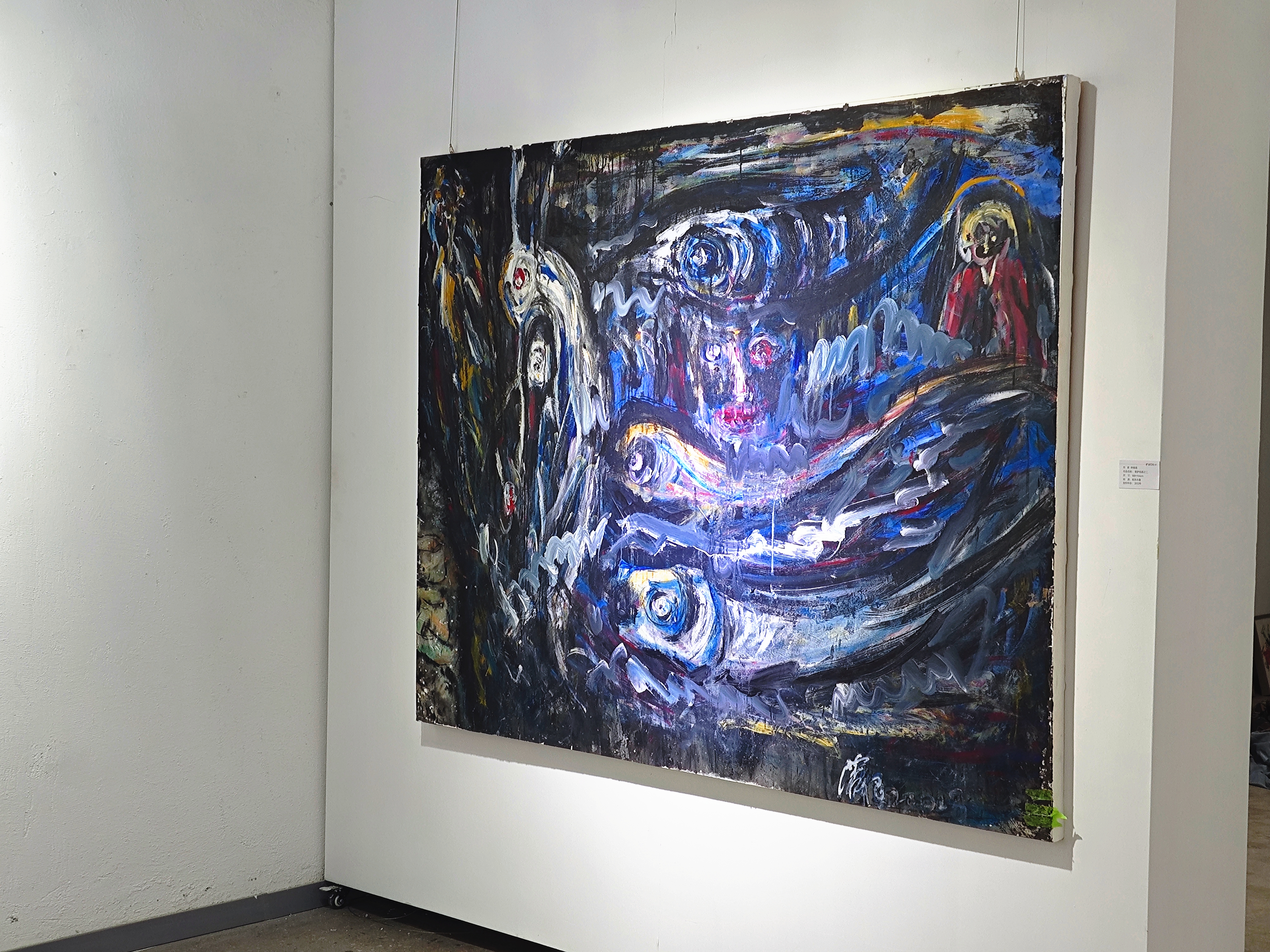
Lin Jichang: Bodhisattva's Lowered Gaze, Mixed Media on Paper
An exhibition, in itself, was never meant to resolve any particular issue. If it offers any guidance, it is merely an invitation to discover oneself. To borrow the words of the Sixth Patriarch Huineng: "How remarkable—the self-nature is originally complete in itself." From the Platform Sutra of the Sixth Patriarch, Chapter on Practice and Enlightenment. This is recorded as a remembrance.
He Fu (Huang Hefu) is a freelance painter born in Raoping, Guangdong. He currently lives and works in Guangzhou.
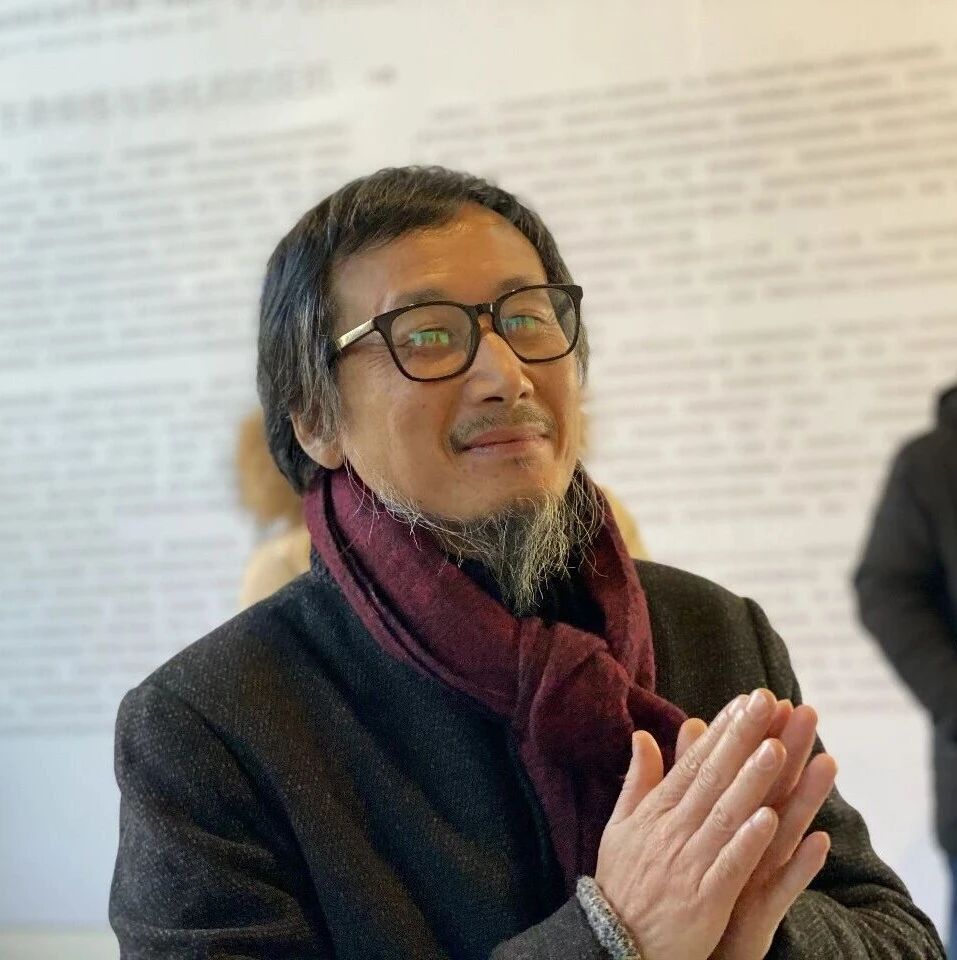
Lin Jichang, also known as Jichang, is an independent artist. He serves as Vice President of the Guangdong Modern Writers Association and concurrently as Director of its Humanities and Art Gallery. He is a painter, poet, and art critic.
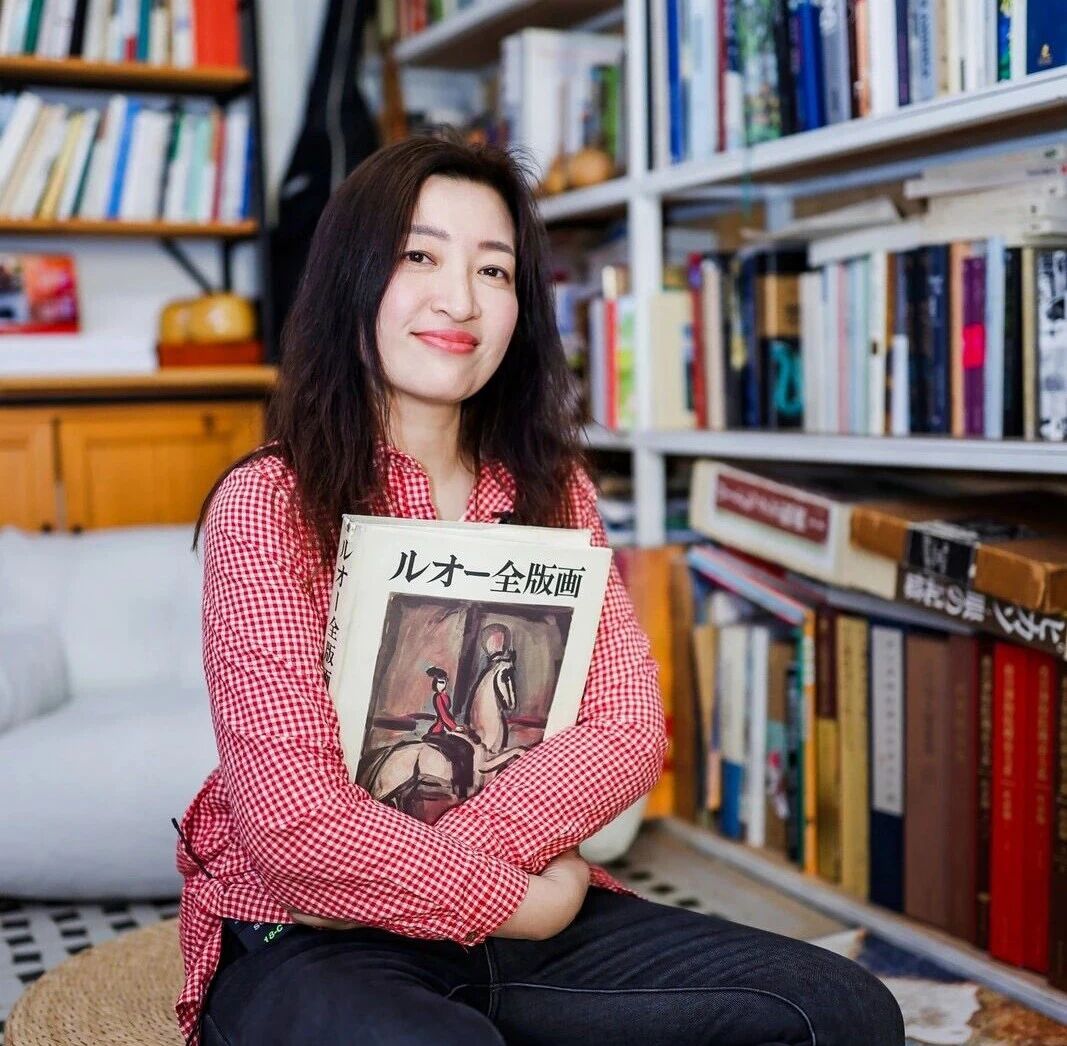
Liu Fang holds a Master's degree in Oil Painting from Renmin University of China and completed the Advanced Studies Program in Expressive Painting at Capital Normal University. She is a member of the Hudson Artists Association in New York.
Ren Zhongyuan is a freelance artist, hailing from Qinghai. He currently lives and works in Beijing.
Wang Huangsheng is a Professor at the Central Academy of Fine Arts and serves as Director of the New Art Museum Studies Research Center at the Guangzhou Academy of Fine Arts.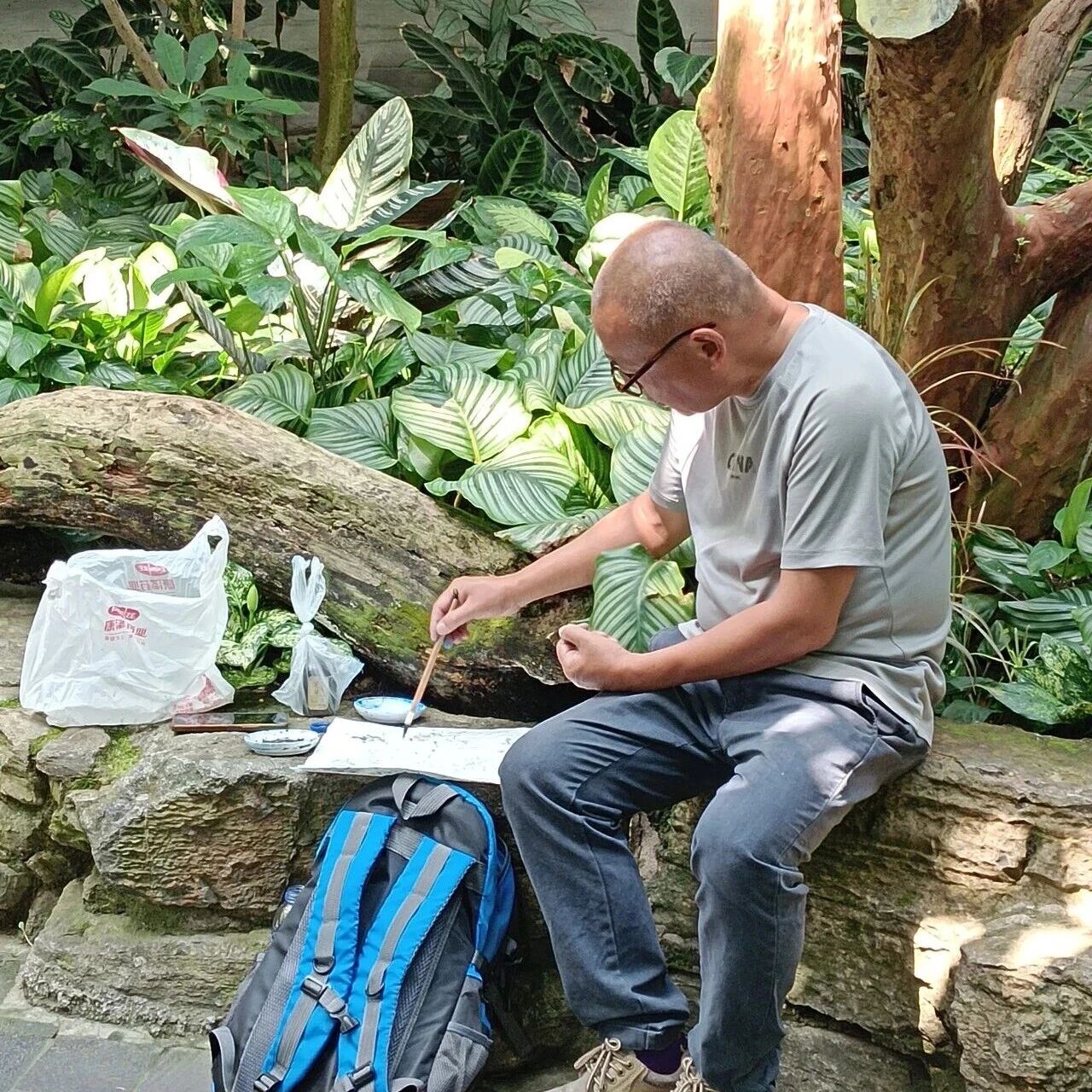
Xiao Qingshu, born in 1963 in Shantou, is a member of the China Artists Association and serves as Director of the Shantou Contemporary Ink Painting Institute.
Yan Pijie, born in 1981, graduated from the Fine Arts College of Shanghai Normal University in 2005 with a major in Sculpture, from the Xiang Jing and Qu Guangci Studio.
Ye Ming, born in Jinan in the late 1950s, graduated from Shenzhen University with a degree in Mass Media and Film. He is a conceptual photographer and serves as a Visiting Professor at the School of Media, Qingdao Hengxing University. He currently resides in Qingdao.
Zhu Zhenhong, born in 1973 in Yinan, Shandong, is a freelance artist.


